Lafayette Blue Springs
Lafayette Blue Springs
Summary
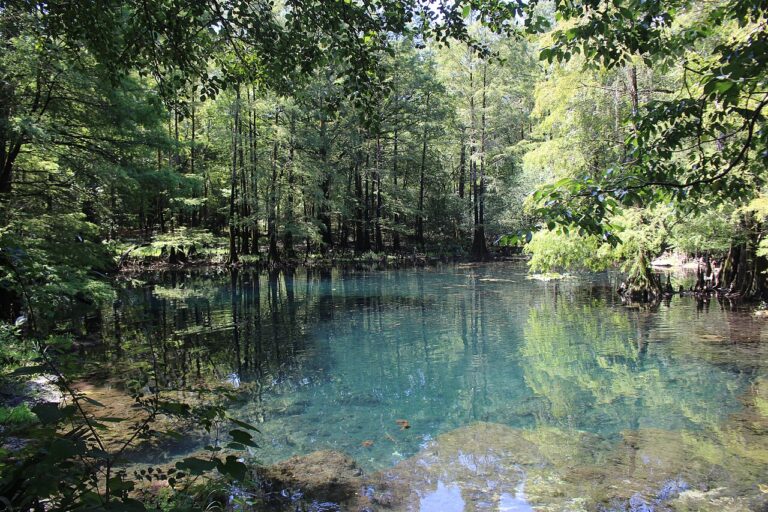
Lafayette Blue Springs State Park is home to one of Florida’s first-magnitude springs, where clear 72-degree water flows from a vast underground cave system into the Suwannee River. A natural limestone bridge crosses the spring run, creating one of the most unique and photogenic spring landscapes in North Florida.
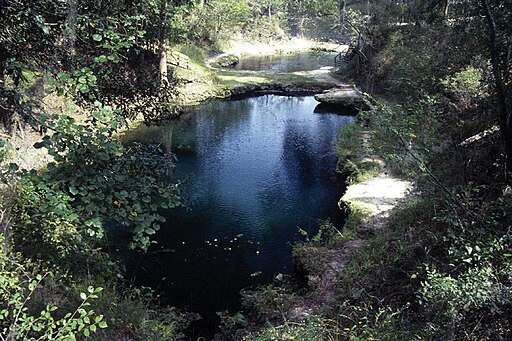
This spring is part of the Green Sink cave system, an extensive underwater network that has been explored for more than 12,000 feet. Large submerged chambers and sinkhole windows connect the spring to the aquifer below, making it an important geological and ecological feature of the region.
The spring basin is deep and popular with experienced swimmers, snorkelers, and certified cave and cavern divers. The surrounding river floodplain, shaded by oaks draped in Spanish moss, gives the park a quiet, old-Florida atmosphere.
- Hours: 8 a.m. to sundown, 365 days a year
- Fees: $5 per vehicle, honor box
Springs in the Park
Lafayette Blue Spring
This is the primary first-magnitude spring and the centerpiece of the park. Water flows from a large vent system beneath the limestone bridge before traveling several hundred feet down the spring run to the Suwannee River.
Allen Millpond Spring Run
A secondary spring run in the park, associated with a second-magnitude spring. Remnants of an old mill structure can still be seen where the run meets the river, adding a historical element to the natural setting.
Swimming and Diving
Swimming is allowed when river levels and water clarity permit. Because the basin is deep and can have limited shallow areas, the spring is best suited for strong swimmers.
Snorkeling is popular, especially near the limestone bridge and along the spring run when visibility is good.
Certified divers explore parts of the Green Sink cave system. Only properly trained and equipped divers should enter submerged passages.
River flooding can push dark tannic water into the spring, temporarily reducing visibility and sometimes leading to swimming closures.
Paddling and River Access
The park sits directly on the Suwannee River, making it a convenient stop for paddlers on the Suwannee River Wilderness Trail. Canoeing and kayaking are popular both on the river and in the calmer waters of the spring run when conditions allow.
Trails and Land Activities
Visitors can hike through hardwood forests and floodplain landscapes on park trails, including the Green Sink Trail. Wildlife viewing is common, with deer, turtles, wading birds, and hawks frequently seen.
Picnic tables and pavilions are available beneath large shade trees, making this a good stop for a relaxed day trip.
Camping
The park offers tent-only camping and a primitive youth camping area. Sites are pack-in with no vehicle access. Cabins on stilts overlooking the river are also available and provide a more comfortable overnight option.
Nearby Recreation: Troy Springs Wildlife Management Area
Just outside the park, the Troy Springs Wildlife Management Area provides additional opportunities for hiking, biking, horseback riding, hunting (in season), fishing, and wildlife viewing across thousands of acres of floodplain forest along the Suwannee River.
Research & Resources
Nearby Springs
- Madison Blue Spring
- Suwannee Springs
-
Wes Skiles Peacock Springs State Park
- Wacissa Springs
- Troy Spring
- Turtle Spring
Photo: State of Florida, photo by T. Scott, Public domain, via Wikimedia Commons
Sorry, no records were found. Please adjust your search criteria and try again.
Sorry, unable to load the Maps API.
Nearby Springs