Rainbow River
Rainbow River
Summary
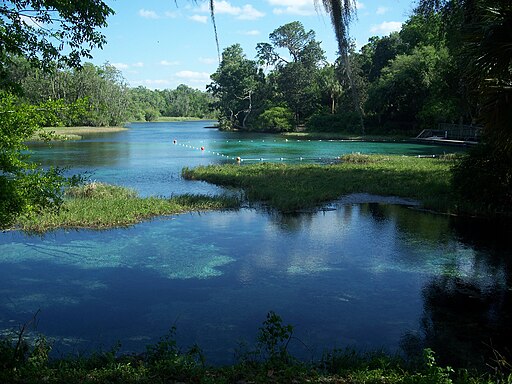
Rainbow River is one of Florida’s most celebrated spring-fed rivers, flowing approximately 5.7 to 7 miles from the headsprings at Rainbow Springs State Park near Dunnellon. Fed by a first-magnitude spring system, the river maintains exceptional clarity, year-round temperatures near 72°F, and visibility often exceeding 100 feet. Known for its gentle current, extensive sand boils, shallow limestone topography, and diverse freshwater wildlife, Rainbow River is a premier destination for tubing, paddling, snorkeling, and drift diving.
Rainbow River originates at the Rainbow Springs headspring complex in Marion County and flows southwest toward the Withlacoochee River. The river is designated as an Aquatic Preserve and the spring system is recognized as one of Florida’s largest first-magnitude springs.
The river’s steady flow creates a slow, consistent downstream current, making it ideal for passive recreation such as tubing and drift snorkeling. Much of the upper river remains protected within state park and county-managed boundaries, though portions downstream include residential development.
Water clarity is one of Rainbow River’s defining features. The aquifer-fed discharge produces crystal-clear aquamarine water with exceptional underwater visibility, frequently reported at 100 feet or more in optimal conditions.
Hydrology and Spring System
Rainbow River is fed by the Rainbow Springs group, a first-magnitude spring complex composed of multiple vents at the headspring. The combined discharge releases millions of gallons of groundwater daily into the river.
Depth varies considerably throughout the river. Shallow areas may measure 4 to 5 feet deep, while larger bowl-shaped depressions reach approximately 20 to 21 feet. Despite these variations, the average depth along much of the drift route is closer to 8–12 feet.
The river bottom consists of:
• Limestone shelves and exposed rock
• Sandy patches
• Pebble substrates
• Expansive river grass beds
• Numerous sand boils and “popcorn springs” where groundwater percolates upward through the sand
Sand boils are a signature feature of Rainbow River. These areas appear as bubbling or shifting sand where spring water emerges directly from the limestone substrate below.
Drift Snorkeling and Diving
Rainbow River is one of Florida’s premier drift dive and drift snorkel locations.
The typical experience begins upstream via water taxi transport. Divers and snorkelers are dropped off near the upper river in the clearest water, then drift naturally downstream with the gentle current. This eliminates the need for strenuous finning and allows for relaxed exploration.
Key characteristics of the drift:
• Maximum depths around 20–21 feet
• Average depths near 10 feet
• Water temperature approximately 72–73°F year-round
• Visibility often exceeding 100 feet
• Duration typically 60–90 minutes underwater
The current creates a sensation of effortless movement, allowing divers and snorkelers to glide over varying bottom terrain. Along the route, participants encounter:
• Sand boils
• Small caverns
• Limestone outcrops
• Grass beds
• Spring vents
One notable feature is a large spring vent commonly referred to as “the cave.” This vent extends only a few meters inward and discharges strong flow from the aquifer, making it a popular observation point.
Drift diving on Rainbow River is suitable for beginners and experienced divers alike due to its shallow depth, calm current, and high visibility. Snorkelers frequently accompany dive groups, as most of the river’s features are easily visible from the surface.
Late spring and summer weekend afternoons tend to be the most crowded periods. Early morning departures typically offer the best conditions for wildlife viewing and quieter water.
Tubing and Paddling
Rainbow River is equally known for recreational tubing and paddling.
Tubing follows a similar downstream model, with shuttle systems transporting visitors to launch points. The float typically takes several hours depending on water level and flow rate.
Kayaking and paddleboarding are also popular. The river’s calm current allows for upstream paddling in certain stretches, though many visitors choose one-way routes.
Wildlife and Ecology
Rainbow River supports abundant freshwater species.
Common fish include:
• Largemouth bass
• Bluegill and other sunfish
• Gar
• Brim
Freshwater turtles are frequently observed, including:
• Sliders
• Musk turtles
• Florida softshell turtles
Otters are occasionally seen. Small alligators may be present but are uncommon in heavily trafficked areas and generally avoid human interaction.
Aquatic vegetation plays a critical ecological role. Extensive river grass beds provide habitat for fish and stabilize sediments. The clarity of the water allows sunlight to penetrate deeply, supporting plant growth along much of the river channel.
Access Points
Primary public access locations include:
Rainbow Springs State Park
19158 SW 81st Place Road
Dunnellon, FL
KP Hole County Park
Often used for drift dive staging and paddle launches. KP Hole charges an admission fee and may reach capacity during peak seasons. Arriving early is recommended, especially during spring and summer weekends.
Tubing Entrance
Designated downstream entry with shuttle service
Once parking lots reach capacity, access may be restricted or shuttles required.
Conservation and Management
Rainbow River is managed as an Aquatic Preserve and is subject to environmental protections designed to preserve water quality and ecological integrity.
Key management elements include:
• Restrictions on disposable items
• Controlled access during high visitation
• Protection of spring vents and limestone substrate
• Regulation of fossil and artifact removal
• Aquatic vegetation protection measures
The health of Rainbow River depends on groundwater quality and flow from the Floridan Aquifer. Like many Florida springs, it faces long-term challenges related to nutrient loading, development pressure, and aquifer withdrawals.
Ongoing management efforts aim to balance recreational use with ecological preservation.
Photo: Ebyabe, CC BY-SA 3.0 <http://creativecommons.org/licenses/by-sa/3.0/>, via Wikimedia Commons
Sorry, no records were found. Please adjust your search criteria and try again.
Sorry, unable to load the Maps API.
Nearby Springs