Beckton Spring
Beckton Spring
Overview
Beckton (Becton) Spring is a lesser-known spring on Holmes Creek near Vernon, Florida. It sits only a short distance from the much more famous Cypress Springs.
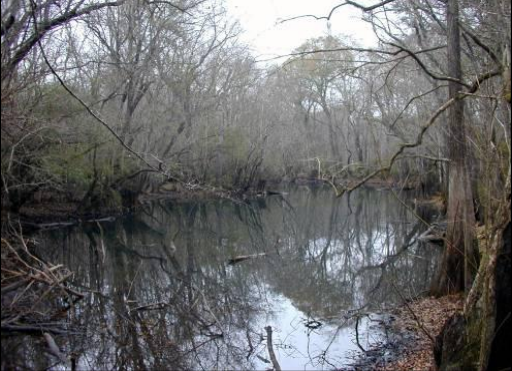
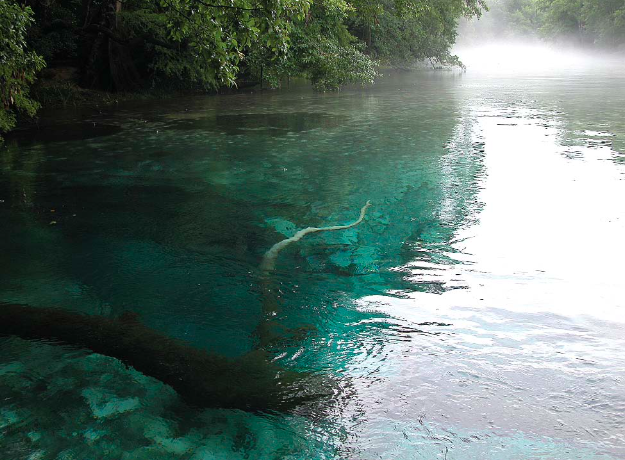
Unlike Cypress Spring, which draws heavy warm-weather paddling and swimming traffic, Beckton Spring is easy to miss if you do not already know where to look. The spring is reached from Holmes Creek by following a side slough or spring run that connects back to the creek downstream. Because creek water can flow directly through the spring area, the water often appears tannic or tea-colored from the surface. Under the right conditions, however, the spring reveals a bright blue-green boil pushing up through the darker water.
Beckton Spring is a second-magnitude spring and one of the more interesting springs in the Holmes Creek system. It combines a large spring pool, a visible boil, submerged vegetation, fish habitat, and a secluded floodplain setting.
Setting and Location
Beckton Spring is located along Holmes Creek in Washington County, Florida, near Vernon. It is in the same general corridor as Cypress Spring, Brunson Landing Spring, Hightower Spring, and other smaller springs that feed the Holmes Creek system.
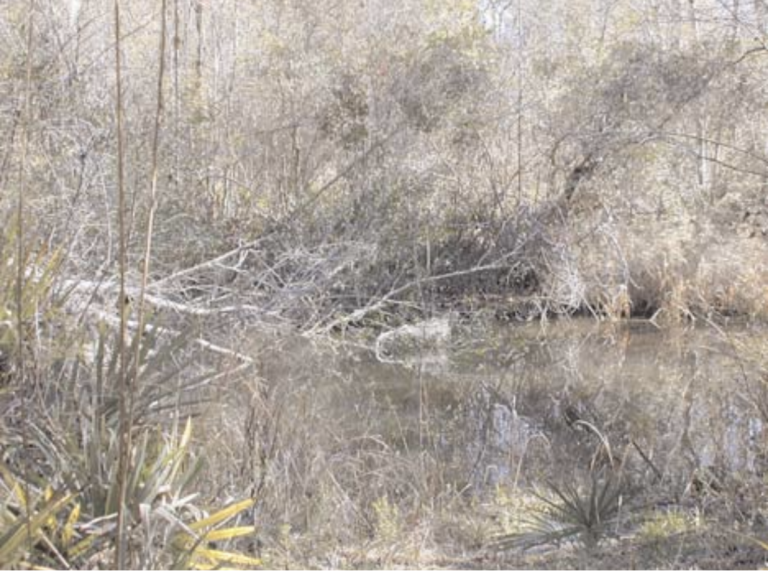
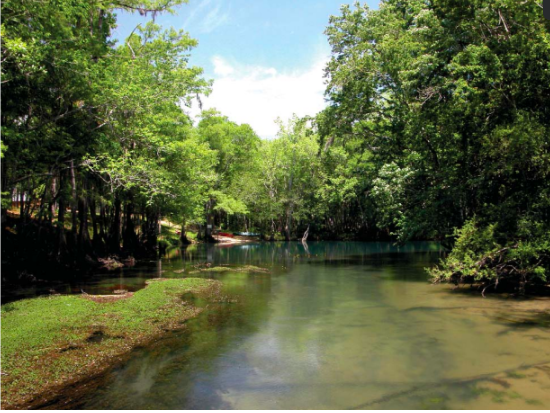
The spring lies in the low floodplain of Holmes Creek, surrounded by cypress, tupelo, and dense vegetation. A side channel or slough connects the spring area with Holmes Creek, making the spring easiest to approach by water. The run is shallow and clear in places, but visibility can change depending on rainfall, creek level, and how much tannic water is moving through the system.
Older survey descriptions place the spring approximately two miles northeast of Vernon, on private land, with access historically associated with the Holmes Creek corridor rather than a developed public spring park.
Spring Description
Beckton Spring has a large spring pool, described in Florida Geological Survey materials as roughly 180 feet north to south and about 150 feet east to west. The pool contains a horseshoe-shaped depression, with a spring vent near the center.
The vent area has been described as approximately 20 feet across, with a maximum depth of about 36 feet. The pool bottom is mostly sand, with limestone exposed near the vent. A noticeable boil is often visible at the surface when conditions are right.
One of the things that makes Beckton Spring visually interesting is the contrast between the darker creek-influenced water and the blue spring water rising from below. In aerial photos and clear-water conditions, the spring can appear as a bright turquoise patch inside a darker floodplain pool.
The spring run is generally shallow and flows back toward the Holmes Creek system. Older descriptions indicate that the run averages about two feet deep and flows south toward Big Pine Creek before reaching Holmes Creek.
Water Clarity and Seasonal Conditions
Beckton Spring can look very different depending on water level and season.
When Holmes Creek is high, tannic water may flood into the spring area and reduce visibility. During lower-water periods, especially in cooler months, the spring boil and blue water can become much easier to see.
This is one reason some visitors are surprised by Beckton Spring. From the surface, it may look like a dark, quiet slough. But under better conditions, the spring reveals clearer water, limestone features, and a distinct boil.
One recent paddling and snorkeling video described winter conditions as especially helpful for visibility, with low water levels making the spring easier to observe. The same video noted that the creek’s tannic water often affects the spring because the channel passes directly through the spring area.
Geology and Hydrology
Beckton Spring is part of the Holmes Creek spring system, which includes multiple second- and third-magnitude springs. Like nearby Cypress Spring, it is fed by groundwater moving through the Floridan Aquifer and emerging through limestone.
The spring has a large pool, a central vent, exposed limestone near the vent, and a measurable boil. Older discharge measurements place the spring in the second-magnitude range, although flow has varied across measurements.
Historical discharge measurements reported in state spring surveys ranged from the low 20s to nearly 50 cubic feet per second. Those numbers place Beckton Spring below the largest Florida springs but still significant within the Holmes Creek system.
One important note is that older survey materials state the spring had been deepened to about 36 feet. Some modern accounts also describe past alteration of the spring basin. Because of that, Beckton Spring is not just a natural spring feature; it is also a spring whose present shape may partly reflect past human disturbance.
Plants, Fish, and Wildlife
Beckton Spring appears to support a richer aquatic habitat than visitors might expect from a small, lesser-known spring.
Observations from spring-focused field visits have noted submerged aquatic plants, healthy snail populations, and a variety of fish. Species observed in the spring or spring run area include sunfish, shiners, mosquitofish, blackspotted topminnow, and darters. A juvenile southern water snake has also been documented in the spring run area.
Compared with heavily used Cypress Spring, Beckton Spring may offer more submerged vegetation in places and a quieter habitat for small fish and invertebrates. The spring’s mix of clear groundwater, tannic creek water, sandy channels, submerged plants, and floodplain forest creates a productive ecological setting.
Recreation and Access
Beckton Spring is best understood as a paddling-access spring rather than a developed swimming destination.
The spring is near Holmes Creek and can be reached from the water by paddlers who know where to enter the side channel or slough. However, the surrounding land is private, and visitors should be careful not to trespass or assume land access is permitted.
There are no major public facilities directly at Beckton Spring. No boardwalk, parking lot, restroom, or official swimming platform is known at the spring itself. Most visitors who see it do so as part of a Holmes Creek paddle.
Nearby Cypress Spring is much better known and much more popular for swimming, snorkeling, paddling, and boat-access recreation. Beckton Spring, by contrast, is more of a quiet side exploration for experienced paddlers who are already on Holmes Creek.
What to Expect
Depending on conditions, Beckton Spring may look like a tannic slough, a blue-green spring pool, or a mix of both. Water clarity can be low when Holmes Creek is high or after rain. During lower-water periods, the spring boil and blue water may be much more visible.
Because the area can include shallow channels, submerged obstacles, private-property boundaries, and variable water levels, paddlers should go slowly, respect posted signs, and avoid entering private land.
Beckton Spring is not the kind of spring most visitors will find by accident – which is part of the appeal.
More Resources
- A Florida Spring Odyssey — Holmes Creek: Cypress, Beckton, and Brunson Landing Springs (the best post out there on the spring)
- Florida Panhandle Springs and Fossils — Beckton Spring photo/post
- USGS Monitoring Site
Photo: Florida Geological Survey Bulletin No. 66, Beckton Spring, photo by H. Means.
Sorry, no records were found. Please adjust your search criteria and try again.
Sorry, unable to load the Maps API.
Nearby Springs