Summary
Apopka Spring is a second-magnitude spring located within Gourd Neck Bay of Lake Apopka in Lake County, Florida. Unlike the clear, sandy-bottom swimming springs found elsewhere in Central Florida, Apopka Spring is a deep, boat-access-only spring surrounded by marsh and swamp habitat.
It is not a recreational swimming or diving destination. Instead, it is a hydrological feature within the Lake Apopka ecosystem, known for its deep vent, variable clarity, and strong connection to the lake’s wildlife-rich environment.
The Spring Vent and Underwater Structure
Apopka Spring discharges from a bowl-shaped depression roughly 5 to 6 feet in diameter in the center of its pool. The visible vent opening begins approximately 40 to 45 feet below the water surface.
Below that, the vent narrows vertically for about 16 feet before sloping northward at roughly a 45-degree angle, extending to depths of around 90 feet. An underground cave system is associated with the spring.
These depths and structural features create hazardous diving conditions. Fatalities have occurred in the past during attempts to explore the vent. This is not a site suitable for recreational diving.
The Spring Pool
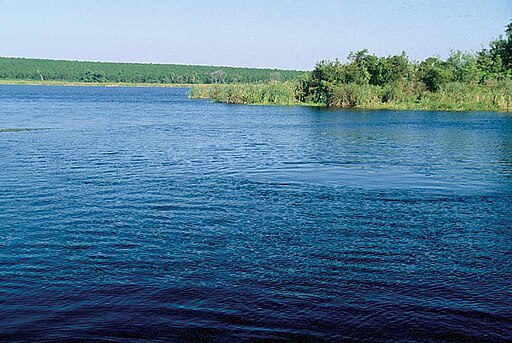
At the surface, the spring forms a circular pool approximately 180 feet in diameter. When spring flow is strong, the pool can appear relatively clean and clear. During periods of lower flow, murky lake water may mix into the pool, reducing visibility.
When lake conditions are calm, a gentle surface boil may be visible directly above the vent opening.
Unlike many Central Florida springs with sandy bottoms, Apopka Spring is bordered by emergent vegetation and organic, mucky substrate along the perimeter. The pool sits within a cove area shaped by the surrounding marshland.
Location and Access
Apopka Spring lies within Gourd Neck Bay of Lake Apopka, east of Clermont. The surrounding land is undeveloped swampland, though suburban development from Clermont exists nearby.
Access to the spring is by boat only. The surrounding shoreline is private property, and there is no public land access to the vent or spring pool itself.
Because of the lake setting and surrounding marsh habitat, wildlife is abundant. Alligators are common in this area, as Lake Apopka supports a large and visible population. Visitors approaching by boat should maintain appropriate distance from wildlife and avoid entering the water.
Surrounding Environment
The spring sits within a diverse ecological setting:
-
Marsh and lowland swamp forest buffer the western side of Gourd Neck
-
Sandhill pine habitat borders portions of the eastern side
-
Emergent vegetation surrounds much of the pool
This landscape is part of the broader Lake Apopka ecosystem, which supports large populations of birds, reptiles, and wetland species.
Hydrology and Lake Interaction
Apopka Spring discharges directly into Lake Apopka. Water clarity in the pool is influenced by both spring flow and lake conditions. During strong discharge, spring water can dominate the pool and appear clearer. When discharge weakens, lake water may intrude, creating murkier conditions.
This interaction makes Apopka Spring visually different from isolated sand-bottom springs that maintain consistently high clarity.
Context Within Lake Apopka
Lake Apopka is one of Florida’s largest lakes and has undergone decades of environmental restoration following historic agricultural pollution. Today, the lake is widely recognized for wildlife viewing, cycling along the North Shore, birding, and scenic landscapes.
Apopka Spring is part of that system — not a standalone recreational attraction, but a geological and hydrological feature within a large marsh-lake environment.
Important Notes for Visitors
-
Apopka Spring is not a swimming destination.
-
The vent is deep and hazardous; diving is extremely dangerous.
-
Access is by boat only.
-
Alligators are common in Lake Apopka and surrounding marshes.
-
Water clarity varies with flow and lake conditions.
Resources:
Photo: State of Florida, photo by R. Means, Public domain, via Wikimedia Commons
Sorry, no records were found. Please adjust your search criteria and try again.
Sorry, unable to load the Maps API.