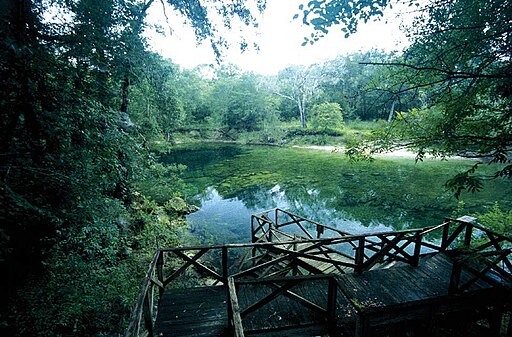
Little River Springs
Little River Springs
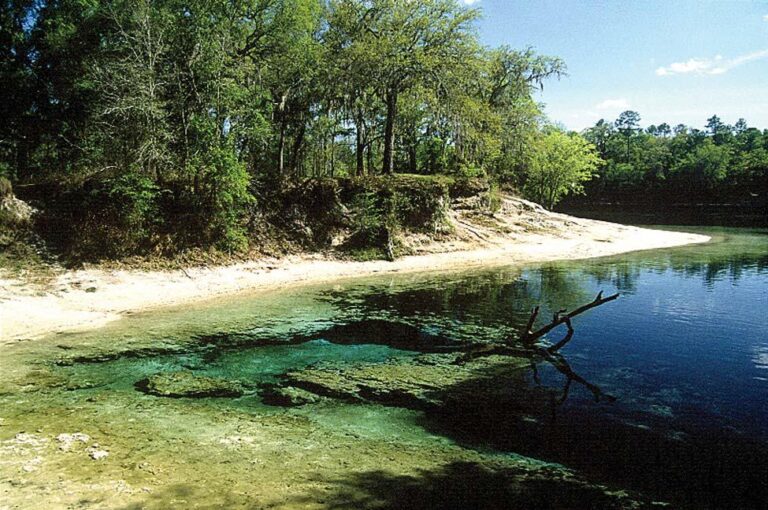
Little River Springs is a 125-acre county park along the Suwannee River in Suwannee County. Known for its striking blue spring basin and extensive underwater cave system, it is one of North Florida’s most popular destinations.
One of the park’s defining features is where the crystal-clear spring water flows directly into the dark, tannin-colored Suwannee River. Depending on river conditions, visitors can often see a dramatic contrast between the two waterways.
The spring run is approximately 150 feet long before joining the Suwannee River, making it easy to explore in a relatively short visit. Several shallow limestone shelves near the shoreline provide an easy place to enter the water before the basin gradually deepens toward the cave entrance.
The spring basin is shallow near shore, making it popular with families, while certified cave divers travel from around the world to explore the cave system beneath the spring.
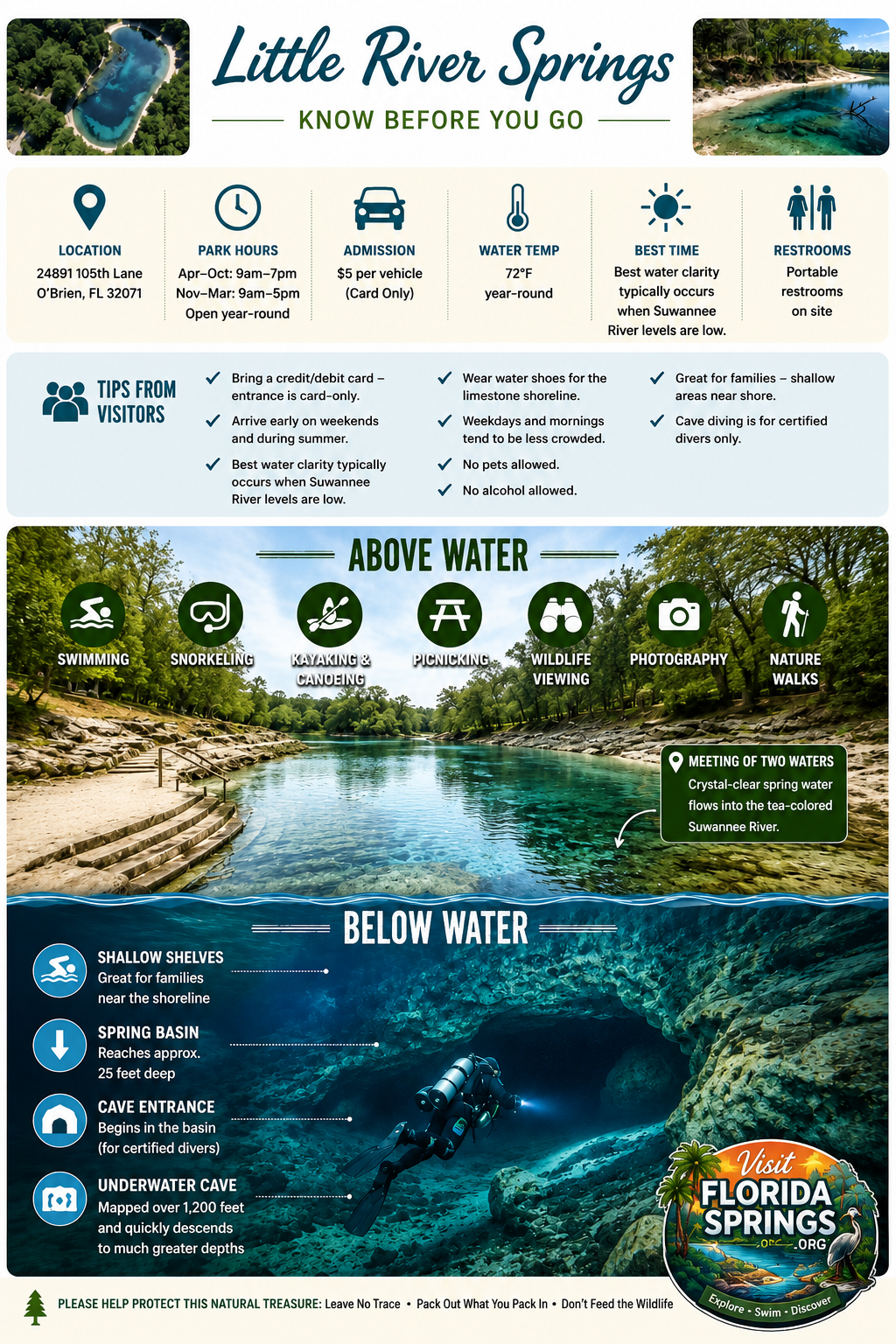
Activities
- Swimming
- Snorkeling
- Kayaking
- Canoeing
- Paddleboarding
- Wildlife viewing
- Picnicking
- Nature walks
Amenities
- Swimming area
- Snorkeling
- Kayak and canoe access
- Three accessible picnic pavilions with grills
- Two scenic overlooks
- Nature trails
- Paved sidewalks
- Portable restrooms
- Paved parking lot
Park Hours
Some sources vary, but according to the official site hours are:
April through October: 9:00 AM – 7:00 PM
November through March: 9:00 AM – 5:00 PM
Admission
At the time of writing, admission is $5 per vehicle.
Cave Diving
Little River Springs is one of Florida’s best-known cave diving destinations.
The spring basin reaches approximately 25 feet deep before the underwater cave begins. Beyond the cavern entrance lies a mapped cave system extending more than 1,200 feet beneath the surrounding limestone.
The cave quickly descends to much greater depths and features strong spring flow. Because of these conditions, the cave is intended only for properly trained and certified cave divers using specialized equipment.
Water Levels Can Dramatically Change Your Visit
Little River Springs can look very different depending on Suwannee River conditions.
When river levels are low, the spring often appears crystal clear, revealing bright limestone, blue water, and the dramatic meeting point between the spring and the tea-colored Suwannee River.
After periods of heavy rainfall or flooding, tannin-stained river water from the Suwannee can back into the spring run, reducing visibility and changing the appearance of the water.
If clear water is your priority, checking current river conditions before visiting is worthwhile.
History and Restoration
Little River Springs has long been one of Suwannee County’s most popular public springs. Over the years, the county and the Suwannee River Water Management District have worked together to improve public access while protecting the spring’s sensitive shoreline.
Past improvements have included accessible walkways, boardwalks, overlooks, erosion-control matting, and shoreline stabilization designed to reduce sediment entering the spring.
Flooding along the Suwannee River has repeatedly damaged portions of the shoreline and park infrastructure. In 2014, the Suwannee River Water Management District partnered with Suwannee County on a restoration project valued at more than $100,000 to repair shoreline erosion, rebuild sections of the walkways, stabilize the banks, and improve long-term protection of the spring.
Wildlife
The surrounding 125-acre park provides habitat for a variety of native wildlife.
Visitors commonly see:
- Wading birds
- Songbirds
- Deer
- Squirrels
- Turtles
- Fish in both the spring and river
The wooded trails also provide opportunities for birdwatching and quiet nature walks away from the swimming area.
Photography
Little River Springs is one of the more photogenic springs along the Suwannee River.
Photographers often visit to capture:
- The contrast between the clear spring and the dark Suwannee River
- The bright blue spring basin
- Limestone shorelines
- Reflections during calm mornings
- Wildlife throughout the park
Water clarity is generally best during periods of lower river levels.
Tips Before You Visit
The following suggestions are based on current park information and recent visitor feedback:
- Bring a credit or debit card, as recent visitors report the entrance station is card-only.
- Arrive early on weekends during warmer months, as parking can fill quickly.
- Water clarity is typically best when Suwannee River levels are low.
- Wear water shoes if you plan to explore around the limestone shoreline.
- Weekday mornings generally offer fewer crowds and better photography conditions.
- Cave diving beyond the cavern entrance should only be attempted by properly trained and certified cave divers.
Frequently Asked Questions
Can you swim at Little River Springs?
Yes. Swimming is one of the park’s most popular activities. The spring maintains a temperature of approximately 72°F year-round.
Is Little River Springs good for snorkeling?
Yes. When river levels are low, visibility is often excellent, making snorkeling popular. After periods of heavy rain or flooding, visibility may decrease as tannin-stained Suwannee River water enters the spring run.
Can you kayak at Little River Springs?
Yes. Visitors can launch kayaks and canoes from the park to explore the Suwannee River.
Is Little River Springs good for families?
Generally, yes. The park includes shallow swimming areas, picnic pavilions, paved walkways, and easy access to the water. Children should always be supervised, particularly near the deeper portions of the spring basin.
Can anyone enter the underwater cave?
No. The underwater cave is intended only for properly trained and certified cave divers. Recreational swimmers, snorkelers, and open-water scuba divers should remain in the open-water portion of the spring.
Why is the water sometimes brown?
The spring itself produces clear water, but it flows directly into the Suwannee River. During periods of high river flow, tannin-stained river water can back into the spring, temporarily reducing visibility and changing the water’s appearance.
Is Little River Springs wheelchair accessible?
Much of the park is accessible. Features include paved sidewalks and accessible picnic pavilions, allowing many visitors to enjoy the spring without navigating uneven terrain.
What is the water temperature?
Like most Florida springs, Little River Springs remains approximately 72°F (22°C) throughout the year.
Resources
- Visit Suwannee – Little River Springs
- Suwannee County Parks & Recreation
- Suwannee River Water Management District
- Extreme Exposure (cave diving) – Little River Springs
- Divernet guide on cave diving the spring
- Facebook post on the spring
Photo: State of Florida, photo by R. Means, Public domain, via Wikimedia Commons