Volusia Blue Spring
Volusia Blue Spring
Overview
Volusia Blue Spring is one of Florida’s most famous springs and one of the best places in the state to see wild manatees. Located inside Blue Spring State Park near Orange City, the spring flows through a clear spring run before entering the St. Johns River.
This is not a hidden or obscure spring. Blue Spring is a major Florida destination, and for good reason. It combines crystal-clear water, manatee viewing, swimming, snorkeling, paddling, scuba diving, camping, river cruises, hiking trails, and one of the most interesting historic homes in the region.
The spring is a first-magnitude spring, meaning it produces an enormous amount of water. Blue Spring is also the largest spring on the St. Johns River, with an average discharge of about 102 million gallons per day. The water remains around 72 to 73 degrees year-round, making it both a refreshing summer swimming spot and an essential warm-water refuge for manatees during the winter.
Because there are many “Blue Springs” in Florida, this one is often referred to as Volusia Blue Spring to distinguish it from other springs with similar names.
Spring Characteristics
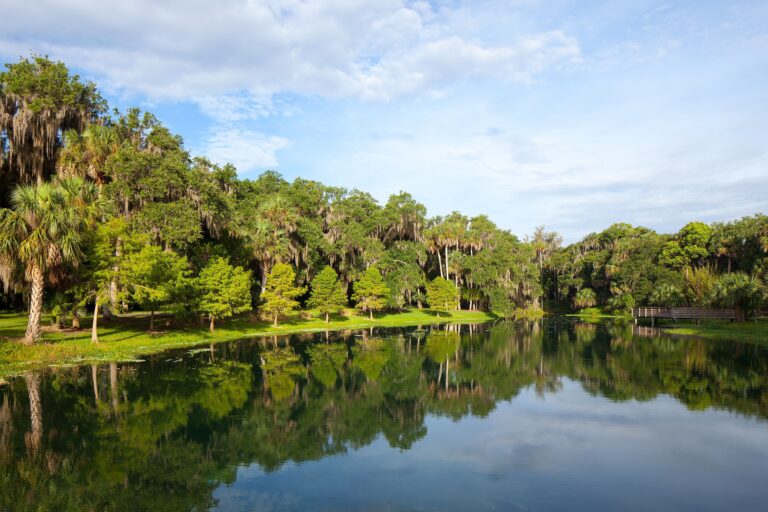
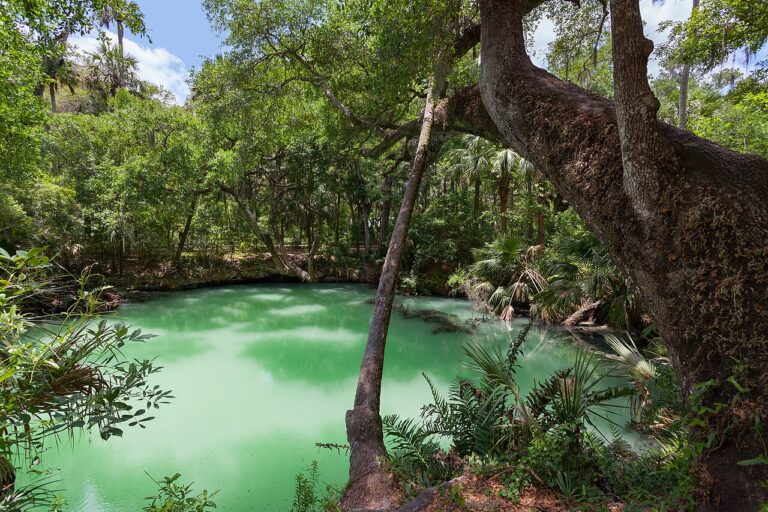
Blue Spring begins in a large, circular spring pool at the head of the spring run. The pool sits within a natural limestone depression, with clear blue-green water rising from a deep vent in the limestone below.
Florida Geological Survey descriptions note that the spring pool measures roughly 135 feet north to south and about 105 feet east to west. The depth over the main vent is about 20 feet, with the bottom composed of limestone and sand. The vent itself is an elongated fissure in the limestone.
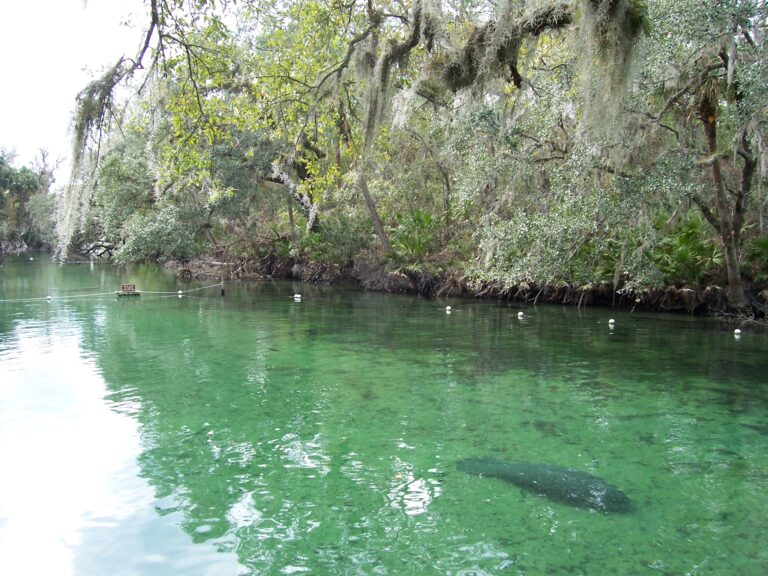
From the spring pool, the run flows toward the St. Johns River through a shaded corridor of hardwoods, palms, and sandy banks. The spring run is one of the most beautiful features of the park, especially when viewed from the elevated boardwalk. Visitors often describe the water as clear, blue-green, and full of visible fish, turtles, and manatees.
Manatees at Blue Spring
For many visitors, manatees are the main reason to visit Blue Spring.
During cooler months, manatees leave colder river water and gather in the warmer spring run. Blue Spring’s constant temperature makes it one of the most important winter refuges for Florida manatees. The park’s manatee season generally runs from mid-November through March, although exact conditions vary with weather and water temperature.
The conservation story here is impressive. Before Blue Spring became a state park, only a small number of manatees were recorded using the spring run. After decades of protection and habitat management, winter manatee counts have increased dramatically, with recent seasons bringing hundreds of manatees into the run.
Visitors frequently describe winter manatee viewing at Blue Spring as one of the most memorable wildlife experiences in Florida. Reviews often mention seeing dozens or even hundreds of manatees from the boardwalk, including mothers with calves, large adults resting in the clear water, and groups slowly moving through the spring run.
During manatee season, water activities in the spring run are restricted to protect the animals. Visitors can still view them from the boardwalks and overlooks, which provide excellent views without disturbing the manatees.
The Boardwalk and Wildlife Viewing
One of the best parts of Blue Spring State Park is how accessible the spring run is. An elevated boardwalk follows the waterway and gives visitors multiple viewing areas along the run.
This is especially valuable during manatee season. Many visitors mention that the boardwalk makes it easy to see manatees, fish, turtles, birds, and the spring itself without needing to swim, paddle, or get in the water.
The boardwalk is also one of the reasons Blue Spring works well for families, photographers, older visitors, and anyone who wants a low-effort way to experience a major Florida spring. Reviews consistently mention the easy walking paths, clean facilities, viewing platforms, and peaceful scenery.
Besides manatees, the park is a good place to see:
- large fish in the spring run
- turtles
- wading birds
- ospreys
- kingfishers
- eagles
- alligators along the St. Johns River
- occasional other wildlife in the forested areas
Swimming and Snorkeling
Outside manatee season, Blue Spring becomes one of Central Florida’s classic swimming and snorkeling destinations.
The spring water is cool, clear, and refreshing, especially during hot weather. Visitors can swim in the spring run, float in the current, snorkel over the limestone bottom, and enjoy the vivid blue-green water that makes the park famous.
Swimming season generally runs from spring through mid-November, but visitors should always check current park rules before going. The spring run may close temporarily for manatee protection, restoration work, weather, or other management reasons.
Snorkeling can be especially rewarding because of the clear water, fish, limestone features, and strong spring flow. The current is noticeable, so visitors should be comfortable in natural water and should follow park guidance.
Paddling and Boat Tours
Blue Spring is also a great destination for paddling. Canoes and kayaks can be launched or rented at the park, and paddlers can explore parts of the St. Johns River system.
The spring run itself is managed carefully, especially during manatee season, but the broader river environment offers a much larger paddling experience. Hontoon Island State Park is nearby on the St. Johns River and can be reached by paddle under the right conditions.
For visitors who do not want to paddle, guided river boat cruises are one of the best ways to experience the larger landscape. Reviews often mention the boat tour as a highlight, especially for seeing birds, alligators, turtles, and the St. Johns River environment beyond the spring run.
This is one of the things that makes Blue Spring different from a simple swimming spring. You can visit just to see the spring and manatees, or you can turn it into a full day with paddling, a river cruise, trails, picnic areas, and the historic house.
Scuba Diving and the Cave System
Blue Spring is also an important scuba diving site.
The spring vent is the entrance to an underwater cave system. The upper portion of the vent descends vertically before continuing deeper at an angle. Open-water divers are limited to shallower areas, while properly certified cave divers may explore farther into the system under park rules.
Diving at Blue Spring is not casual swimming. Divers must follow park requirements, register as required, and respect seasonal closures. During manatee season, diving and other water activities are restricted to protect the animals.
For experienced divers, Blue Spring is known for its strong flow, clear water, and dramatic spring vent. Some divers describe the site as a classic Central Florida spring dive, but conditions can vary, and visibility may be affected by natural changes in the cave or spring system.
Hiking, Birding, and Camping
Blue Spring State Park offers much more than the spring itself.
The park includes the Pine Island Trail, a longer hiking route through the surrounding habitat. Visitors can also enjoy shorter walks near the spring run, picnic areas, and riverfront portions of the park.
Birding is another strong activity here. The mix of spring run, river, hardwood forest, and wetland habitat attracts wading birds, raptors, and smaller woodland species. Visitors often mention seeing ospreys, eagles, herons, kingfishers, and other birds during walks or boat tours.
Blue Spring also has camping and cabins, making it possible to stay overnight inside the park. Reviews frequently mention clean facilities, peaceful campsites, and easy access to the spring and trails. For visitors hoping to see manatees early in the morning, staying inside the park can be a major advantage.
Thursby House and Local History
Blue Spring is also a historic site.
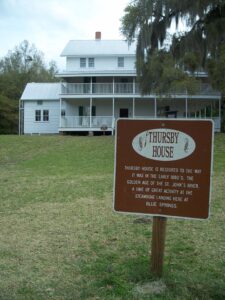
The Thursby House, located inside the park, is one of the most important historic structures along this part of the St. Johns River. Louis P. Thursby settled near Blue Spring in the 1850s, and the house was built in the 1870s. The property became tied to steamboat travel, citrus, tourism, and the early development of the region.
The house now serves as a reminder of the St. Johns River’s steamboat era, when river travel connected isolated communities throughout Central Florida. Visitors can explore the historic area and learn more about the people who lived and worked along the river before modern roads transformed the region.
This historical layer gives Blue Spring more depth than many spring destinations. It is not only a swimming hole or manatee refuge; it is also a window into early Florida settlement, river transportation, and the transition from frontier homestead to protected state park.
Conservation and Water Quality
Blue Spring is beautiful, but it is also vulnerable.
Like many Florida springs, Blue Spring depends on the health of the Floridan Aquifer. Rainfall enters the aquifer across the springshed and eventually emerges at the spring vent. Land use, groundwater withdrawals, pollution, and nutrient levels can all affect the water that reaches the spring.
The USGS notes that water discharging from Blue Spring may include groundwater ranging from relatively recent recharge to water that entered the aquifer decades ago. That means today’s spring conditions can reflect land-use decisions made years earlier.
Blue Spring has also faced concerns related to flow reduction, algae growth, and ecosystem stress. At the same time, it remains one of Florida’s clearest examples of successful wildlife protection. The growth in manatee use of the spring run shows how conservation measures can make a visible difference when habitat is protected and managed carefully.
Visitor Experience
Blue Spring is one of those places where the visitor experience changes dramatically by season.
In winter, the main attraction is manatee viewing. Visitors often describe the experience as unforgettable, especially on cold days when large numbers of manatees gather in the spring run. Many reviews mention arriving early, watching manatees from the boardwalk, and seeing the daily manatee count posted by park staff.
In warmer months, the experience shifts toward swimming, snorkeling, tubing, paddling, camping, and picnicking. The same spring run that protects manatees in winter becomes a popular place to cool off in summer.
The most common visitor complaint is crowding. Blue Spring is extremely popular, and the park often reaches capacity during peak periods. Many visitors recommend arriving before opening or very early in the day, especially during manatee season, weekends, holidays, and warm-weather swimming days.
For the best experience, arrive early, check current closures, and plan around the season. Winter is best for manatees. Late spring through early fall is best for swimming and snorkeling.
Access Information
The park is west of Orange City and accessible from U.S. 17/92 via French Avenue.
The park is open year-round, but the spring run has seasonal restrictions. Water activities are generally limited during manatee season and may also be affected by restoration work, weather, high visitation, or park management decisions.
More Resources
- Florida State Parks
- USGS – Volusia Blue Spring
- FloridaSprings.org
- St. Johns River Water Management District
- Google Maps link
- Reddit thread on diving the spring
- Cave Atlas
- Thursby House – Wikipedia
- Manatee webcams
Photo credits:
- Ebyabe, CC BY-SA 3.0 <http://creativecommons.org/licenses/by-sa/3.0/>, via Wikimedia Commons
- No machine-readable author provided. Tetraminoe assumed (based on copyright claims)., CC BY-SA 3.0 <http://creativecommons.org/licenses/by-sa/3.0/>, via Wikimedia Commons