Wes Skiles Peacock Springs State Park
Wes Skiles Peacock Springs State Park
Summary
Wes Skiles Peacock Springs State Park is one of the premier cave diving destinations in the world and home to one of the longest underwater cave systems in the continental United States. Located near Luraville and Live Oak in Suwannee County, the 733-acre park protects a remarkable network of springs, sinkholes, submerged passages, and mature North Florida forest.
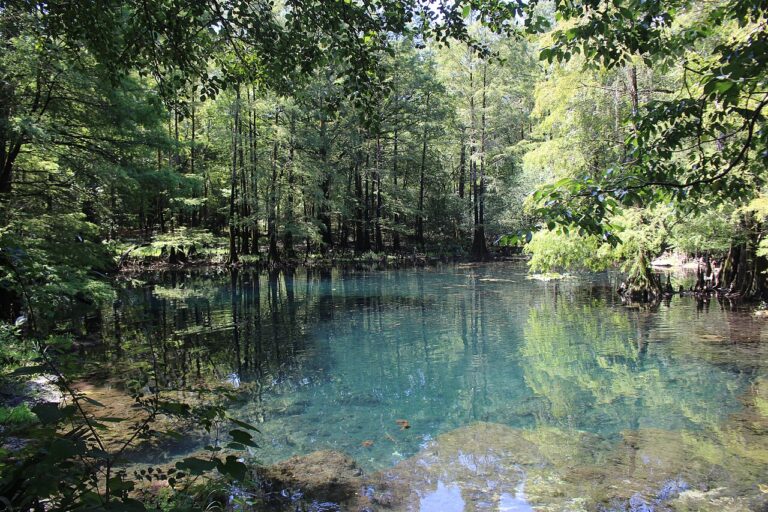
While the park is internationally famous among cave divers, Peacock Springs also offers hiking, swimming, wildlife viewing, photography, and peaceful forest scenery for non-divers. Clear blue spring water, towering hardwoods, limestone sinkholes, and winding interpretive trails make the park one of the most unique natural areas in Florida.
One of Florida’s Most Famous Cave Systems
Peacock Springs contains more than 33,000 feet of mapped underwater cave passages, with ongoing discoveries continuing to expand the known system. The cave network includes multiple springs and sinkholes connected through flooded limestone tunnels beneath the forest floor.
The system was first explored in the 1950s and later extensively surveyed by legendary cave diver Sheck Exley and other pioneering explorers. Today, Peacock Springs remains one of the most important cave diving training and exploration sites in North America.
Major features within the system include:
- Peacock I,
- Peacock II,
- Orange Grove Sink,
- Olsen Sink,
- Challenge Sink,
- Cisteen Sink,
- Waterhole,
- and several connecting tunnels and siphons.
The underwater passages range from large open tunnels to narrow restrictions and deep sections descending well over 100 feet.
Cave Diving at Peacock Springs
Cave divers travel from around the world to dive Peacock Springs. The system is considered both historically important and technically challenging, with extensive guideline networks and multiple entrances throughout the park.
Popular routes include:
- the Peanut Tunnel,
- Pothole Tunnel,
- Peacock II Tunnel,
- and Upper and Lower Orange Grove passages.
The park only allows certified scuba divers to enter the cave systems, and divers must show proof of certification before cave diving. Diver propulsion vehicles are prohibited to help protect the fragile cave environment.
For non-divers, the park still offers an unusual opportunity to watch cave divers descending into crystal-clear springs surrounded by dense forest and limestone formations.
Springs, Sinkholes, and Swimming
Although best known for cave diving, Peacock Springs is also popular for swimming and snorkeling when water conditions are clear.
The park contains:
- two major springs,
- a spring run,
- and multiple sinkholes in near-pristine condition.
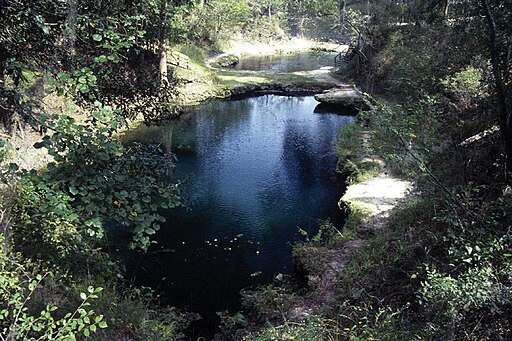
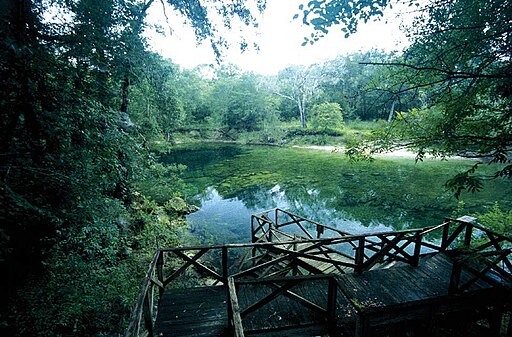
Peacock I is the most accessible spring, reached by a wooden walkway and staircase descending into vivid blue water surrounded by forest. Orange Grove Sink is another striking feature, with steep limestone walls dropping into a deep basin connected to the cave system below.
Water conditions vary significantly depending on rainfall and river flooding. During periods of heavy rain, the springs can become “browned out” from tannic river water and sediment intrusion. During clearer conditions, the water can appear intensely blue and transparent.
Hiking and Nature Trails
An award-winning interpretive trail winds through the park above the underground cave system. Informational signs explain the geology, hydrology, sinkhole formation, cave exploration history, and ecology of the Floridan Aquifer region.
The trails pass:
- sinkholes,
- limestone depressions,
- hardwood forest,
- cypress stands,
- and spring overlooks.
Wildlife commonly seen in the park includes:
- deer,
- turtles,
- otters,
- raccoons,
- armadillos,
- barred owls,
- herons,
- and numerous aquatic species.
Visitors often describe the park as quieter and more secluded than many of Florida’s larger springs parks.
History of the Park
The park was renamed in 2010 to honor Wes Skiles, the renowned underwater explorer, cinematographer, photographer, and cave diver who helped document Florida’s springs and cave systems.
The limestone beneath Peacock Springs formed millions of years ago when Florida was submerged beneath a shallow sea. Over time, slightly acidic groundwater dissolved the limestone, creating the extensive karst system that now forms the park’s underwater tunnels and sinkholes.
In 2006, the park expanded significantly through a major land acquisition that more than doubled its protected acreage.
Important Safety Information
Peacock Springs is beautiful but potentially dangerous. Cave diving fatalities have occurred within the system over the decades, and the caves should only be explored by properly trained and certified divers using appropriate equipment and procedures.
Even surface visitors should use caution around:
- steep limestone edges,
- deep water,
- slippery rocks,
- and sinkhole drop-offs.
Conditions can change rapidly after storms or periods of flooding.
Visiting Wes Skiles Peacock Springs State Park
The park is located southwest of Live Oak near Luraville and is open daily from 8 a.m. until sunset. Dives must conclude one hour before sundown.
Popular activities include:
- cave diving,
- snorkeling,
- swimming,
- hiking,
- photography,
- picnicking,
- and wildlife viewing.
Because of its remote setting and international reputation among divers, Peacock Springs offers a very different atmosphere from Florida’s more commercialized springs parks — quieter, wilder, and deeply connected to the geology beneath North Florida.
More Resources
Michael Rivera, CC BY-SA 4.0 <https://creativecommons.org/licenses/by-sa/4.0>, via Wikimedia Commons
Sorry, no records were found. Please adjust your search criteria and try again.
Sorry, unable to load the Maps API.
Nearby Springs