Worthington Spring
Worthington Spring
Overview
Worthington Spring is a historic spring located in the small town of Worthington Springs in Union County, Florida, along the upper Santa Fe River. Although the spring no longer flows as it once did, it remains one of North Florida’s most historically significant spring sites and played a major role in the development of the surrounding community.
Today, the spring is located within Chastain-Seay Park, where visitors can explore the grounds, picnic near the river, launch boats onto the Santa Fe, and learn about a spring that once attracted travelers from across Florida.
History of Worthington Spring
During the late 1800s and early 1900s, Worthington Spring became one of North Florida’s best-known mineral springs. The sulfur-rich water was widely believed to have medicinal benefits, attracting visitors seeking relief from a variety of ailments.
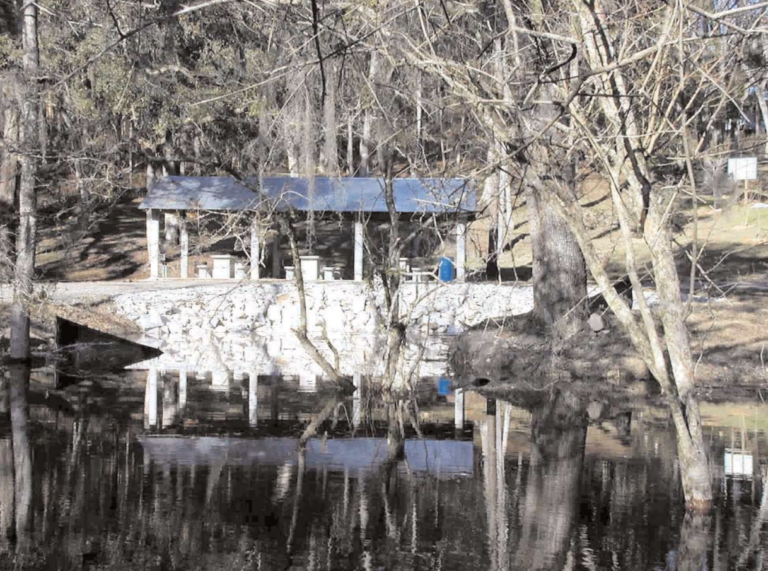
As tourism grew, a resort complex developed around the spring. Historical accounts describe a hotel, bathhouse, recreation hall, and swimming facilities serving visitors from throughout the region. In 1906, the spring was enclosed within a concrete structure that diverted water into a large swimming pool, creating a formal bathing area that remained a popular attraction for decades.
Holiday celebrations regularly drew large crowds, and special trains reportedly brought visitors from Jacksonville to the springs during major events. At its peak, Worthington Springs was one of North Florida’s most popular inland recreation destinations before declining spring flow and changing travel patterns led to the resort’s eventual disappearance.
Spring Characteristics
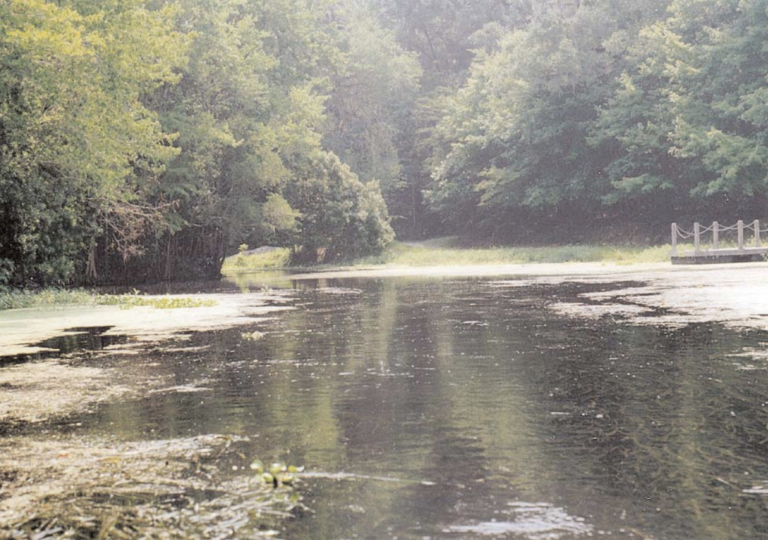
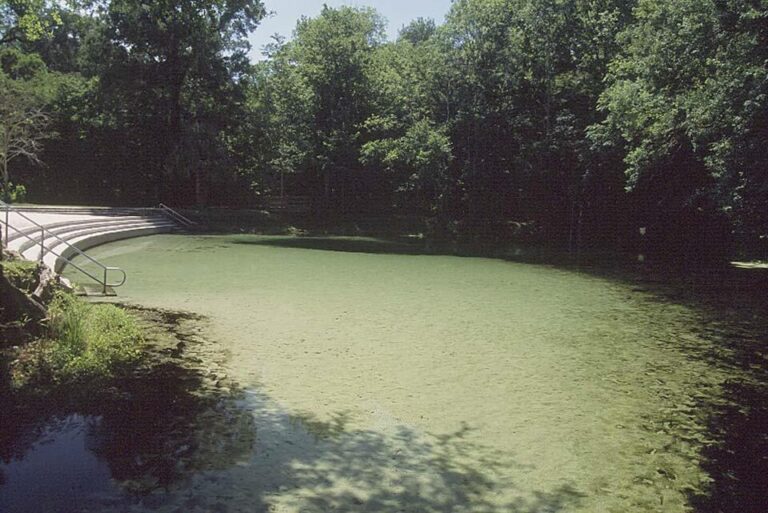
Florida Geological Survey reports describe Worthington Spring as having a circular spring pool approximately 60 feet in diameter. Historically, the spring discharged into a run that flowed roughly 300 feet southwest into a backwater slough connected to the Santa Fe River.
The spring pool was once heavily modified for recreational use, including a concrete enclosure and developed swimming facilities. In later years, restoration efforts returned parts of the site to a more natural appearance.
Flow from the spring declined significantly during the twentieth century and eventually ceased altogether. While the original spring is no longer an active swimming destination, its historical footprint remains visible within the park landscape.
Chastain-Seay Park
Although swimming in the historic spring is no longer a primary attraction, Worthington Spring serves as the centerpiece of Chastain-Seay Park, a community park located just off State Road 121 near the Santa Fe River bridge.
The park includes:
- Picnic pavilions
- River access
- Walking areas
- Boat launch facilities
- Restrooms
- Playground areas
The site preserves the memory of one of North Florida’s early spring resorts while providing public access to the surrounding river environment.
The “Healing Waters” Era
One of the most fascinating parts of Worthington Spring’s history is its reputation as a medicinal spring.
Historical advertisements promoted the sulfur-rich water as beneficial for various health conditions, and visitors traveled from around the state to drink the spring water and bathe in the spring-fed pools. The town itself grew around the spring, eventually becoming known as Worthington Springs.
Local stories describe crowded holiday celebrations, resort visitors arriving by train, and large gatherings beneath the oak trees surrounding the spring. Even today, many longtime residents remember stories passed down about the spring’s famous “healing waters.”
Access Information
Worthington Spring is located within Chastain-Seay Park in Worthington Springs, Florida, along State Road 121 near the Santa Fe River.
The site is publicly accessible and easy to visit compared to many remote Florida springs.
External Resources
- Town of Worthington Springs
- News article about the town and spring
Photo: Florida Geological Survey, Bulletin No. 66
Sorry, no records were found. Please adjust your search criteria and try again.
Sorry, unable to load the Maps API.
Nearby Springs