Clifton Springs
Clifton Springs
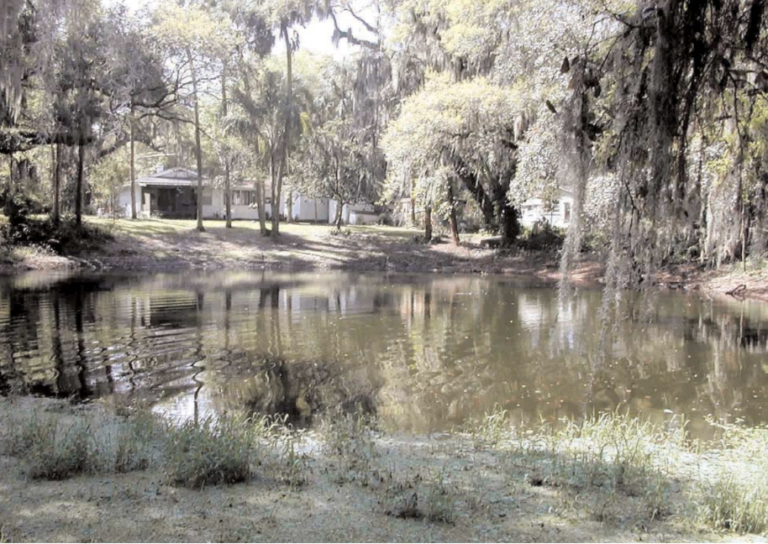
Clifton Springs is a little-known third-magnitude spring located within Overlook Park on the southern shore of Lake Jesup in Oviedo. Unlike Florida’s famous crystal-clear swimming springs, Clifton Springs is a warm mineral (sulfur) spring that flows through a quiet spring run into Lake Jesup, part of the St. Johns River system.
Clifton Springs actually has one of the richest histories of any spring in Central Florida. The site was visited by naturalists John and William Bartram during their exploration of Florida in the 1760s, later became an important steamboat landing known as White’s Wharf, and eventually gave its name to the surrounding community after the famous mineral springs of Clifton Springs, New York.
What You’ll Find
Overlook Park is a small park that includes:
- The main Clifton Springs pool
- A short spring run flowing into Lake Jesup
- Historic White’s Wharf marker
- Boardwalk
- Pavilion
- Picnic tables
- Fishing access
- Boat access nearby
- Views of Lake Jesup
- Mature live oaks and native vegetation
The Spring
Clifton Springs is classified as a third-magnitude spring group consisting of at least four separate springs that feed two different spring runs.
The main spring pool is approximately 150 feet across. Unlike Florida’s limestone-bottom springs, Clifton Springs has a muddy bottom with algae-coated vegetation and naturally turbid water. A visible surface boil marks where groundwater reaches the surface before flowing roughly 250 feet into Lake Jesup.
Additional spring boils lie east of Spring Avenue, where they feed another spring run before joining the lake. These vents are located on private property and cannot be visited.
A Spring With Deep Historical Roots
Long before roads reached this part of Seminole County, Clifton Springs served as an important stop along Lake Jesup.
Historical accounts indicate that naturalists John and William Bartram camped near these sulfur springs during their expedition along the St. Johns River in 1765–1766, making Clifton Springs one of the earliest documented springs visited by European explorers in Central Florida.
During the late 1870s, merchant W. G. White established a general store and steamboat landing here known as White’s Wharf. Farmers traveled by wagon and ox cart from throughout Central Florida to trade goods arriving by steamboat across Lake Jesup.
When railroads replaced steamboat transportation during the 1880s, White moved his business to Orlando, but the spring remained a local landmark.
Around this time, the site became known as Clifton Springs, named after the famous mineral springs resort in Clifton Springs, New York, honoring Dr. Henry Foster, a New York physician who spent winters in nearby Oviedo.
Today, a Seminole County historic marker at Overlook Park commemorates this unique history.
Wildlife
Although Clifton Springs is small, the surrounding Lake Jesup ecosystem supports abundant wildlife. Lake Jesup is nationally known for its large alligator population, so visitors should remain alert and avoid approaching the water’s edge.
Can You Swim at Clifton Springs?
Although Clifton Springs historically served as a local swimming hole, it is not promoted today as a swimming destination.
The water is naturally warm, contains sulfur, and is typically much more turbid than many of Florida’s better-known springs. Most visitors today come for the history, wildlife, fishing, and peaceful setting rather than swimming. Seminole County also does not advertise swimming among the park’s recreational opportunities.
Tips Before You Visit
Based on visitor experiences and the site’s characteristics:
- Visit during cooler morning or evening hours for the best wildlife viewing.
- Bring binoculars if you enjoy birdwatching.
- Expect natural, tea-colored and sulfur-rich water rather than the crystal-clear springs found elsewhere in Florida.
- Keep a safe distance from alligators and other wildlife along Lake Jesup.
- Pair your visit with nearby attractions such as the Lake Jesup Conservation Area or the Black Hammock area for a half-day outing.
FAQs
Where is Clifton Springs?
Clifton Springs is located within Overlook Park at 1988 Spring Avenue in Oviedo, on the southern shore of Lake Jesup.
Is Clifton Springs inside Overlook Park?
Yes. The main spring pool is located within Overlook Park, while several additional spring vents lie across Spring Avenue on private property.
Can you swim at Clifton Springs?
While people have historically swum here, Clifton Springs is not managed or promoted as a swimming spring today. Most visitors come to enjoy the history, wildlife, and views of Lake Jesup.
Why is the water murky?
Unlike many Florida springs with white limestone bottoms, Clifton Springs has a muddy bottom and sulfur-rich mineral water. Its connection to Lake Jesup also contributes to lower water clarity.
Why does Clifton Springs smell like sulfur?
The spring is a natural mineral spring. Sulfur compounds dissolved in the groundwater produce the characteristic “rotten egg” smell common to many mineral springs.
Is Clifton Springs historically significant?
Yes. The spring was visited by John and William Bartram during their exploration of Florida, later became the site of White’s Wharf, and played an important role in transportation and commerce on Lake Jesup during the late 1800s.
Resources
- Seminole County Overlook Park
- St. Johns River Water Management District – Clifton Springs
- Facebook post with Historic White’s Wharf Marker
Photo: Florida Geological Survey, Bulletin No. 66
Sorry, no records were found. Please adjust your search criteria and try again.
Sorry, unable to load the Maps API.
Nearby Springs
