DeLeon Springs
DeLeon Springs
Overview
De Leon Springs is one of Central Florida’s classic state park springs, combining clear spring water, swimming, paddling, wildlife, deep history, and one of the most unusual park restaurants in Florida. Located in Volusia County just north of DeLand, the spring is the centerpiece of De Leon Springs State Park, a 625-acre park that has attracted people for thousands of years.
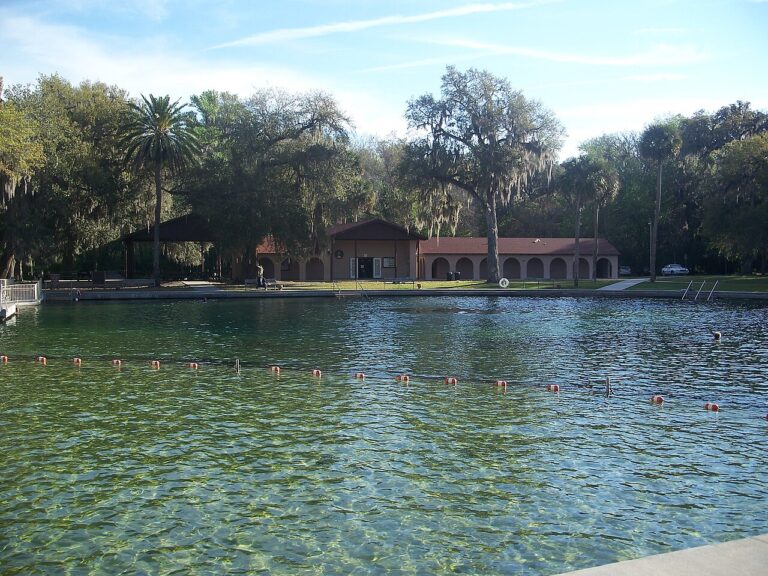
The spring pool is developed for swimming, with a broad circular basin, concrete edges, ladders, and a large open recreation area around the water. Unlike many remote Florida springs, De Leon Springs is easy to visit, family-friendly, and full of amenities. Visitors come to swim in the cool spring water, rent kayaks or paddle boats, take the eco/history boat tour, walk nature trails, picnic, fish, and eat at the Old Sugar Mill Pancake House.
The park also has a much deeper story. Long before it became a modern state park, the spring supported Native American communities, powered mill operations, drew early travelers, and became part of Florida’s roadside attraction era.
The Spring Pool and Swimming
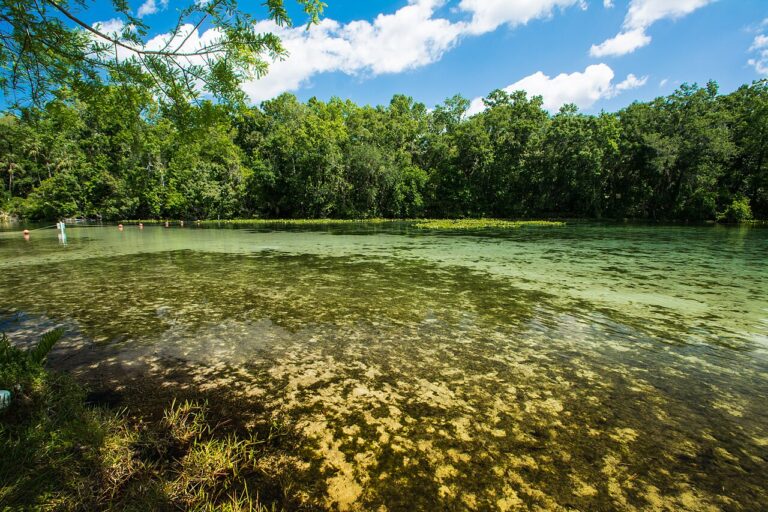
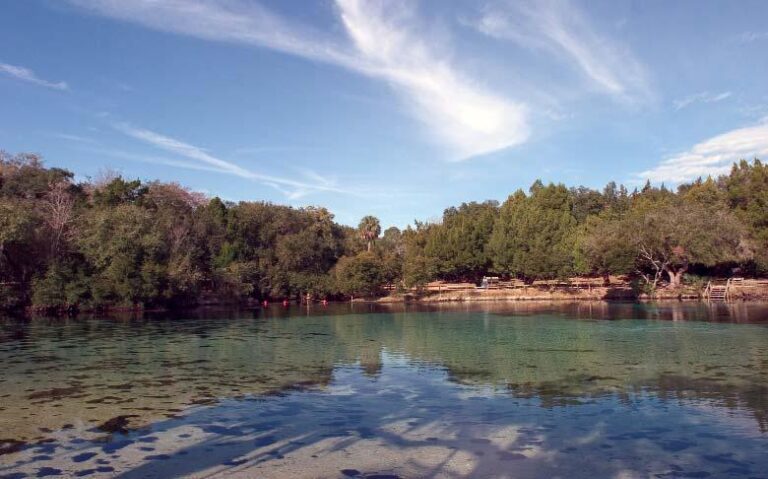
De Leon Spring is a large, clear spring basin with a light greenish tint. The Florida Geological Survey described the pool as a circular, conical depression measuring about 189 feet north to south and 168 feet east to west. The maximum depth is about 28 feet over the vent, where water issues from the center of the pool.
The swimming area is one of the most developed spring pools in Florida, with sidewalks, access ladders, a bulkhead, and open lawns around the basin. This gives it a very different feel from wilderness springs, but it also makes the site easier for families and casual visitors to enjoy. In fact, swimming is one of the main reasons people visit De Leon Springs. The spring pool is open for swimming in designated areas, with depths ranging from shallow wading water to the deeper spring boil.
Paddling, Boating, and the Spring Run
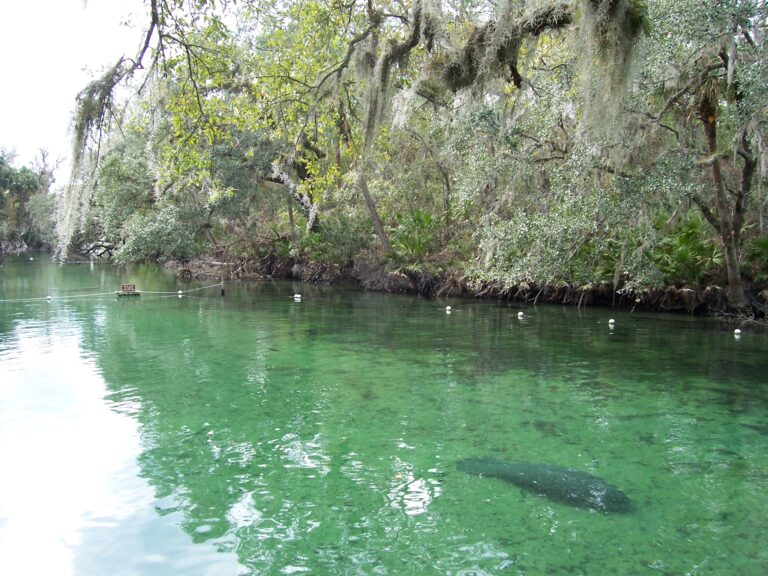
De Leon Springs is also a good paddling destination. Canoes, kayaks, and paddle boats are available through the park concession, and the spring run connects visitors with the larger Lake Woodruff National Wildlife Refuge landscape.
The spring run flows west from the pool and eventually reaches Lake Woodruff. Paddlers can explore quiet water, wetland edges, and wildlife habitat. Reviews often mention the peaceful feel of the spring run and the chance to see wildlife from the water.
The park also has a boat ramp and dock. Fishing is allowed in designated areas, and anglers may fish for bass and bream from shore or from the fishing dock.
Eco/Heritage Boat Tour
One of the best ways to experience De Leon Springs without paddling is the Eco/Heritage Boat Tour. The tour runs through De Leon Springs State Park and into Lake Woodruff National Wildlife Refuge, combining scenery, local history, and wildlife viewing.
Visitors often praise the boat tour for its relaxed pace, shaded seating, and knowledgeable guides. Reviews mention seeing birds, open lake scenery, and learning more about the plants, animals, and history of the area.
This is a good option for families, older visitors, or anyone who wants a guided experience without having to rent a kayak or canoe.
Old Sugar Mill Pancake House
The Old Sugar Mill Pancake House is one of De Leon Springs’ signature attractions. Many people visit the park specifically to eat there before or after swimming.
The restaurant is known for cook-your-own pancakes at the table, making it a memorable stop for families and groups. Visitor reviews frequently mention the pancake experience as part of what makes the park feel different from other springs.
Because the restaurant is popular, wait times can happen during busy periods. If you want to combine breakfast with swimming, it is usually best to arrive early.
Trails and Nature
De Leon Springs State Park has both short and longer trail options. The half-mile paved nature trail is an easy walk and includes interpretive features. A boardwalk leads visitors to “Old Methuselah,” a huge bald cypress estimated to be more than 500 years old.
The longer Wild Persimmon Trail is about 4.2 miles and passes through hardwood hammock, cypress swamp, and old agricultural fields. This trail gives visitors a quieter look at the park beyond the swimming area.
The surrounding forest includes red maple, sweetgum, magnolia, cabbage palm, hickory, ferns, vines, and seasonal wildflowers. The park brochure also notes that yellow anise, an endangered plant, is abundant in the park.
Wildlife
De Leon Springs is a strong wildlife-viewing destination, especially because of its connection to Lake Woodruff National Wildlife Refuge and the St. Johns River system.
Birding can be good along the spring run, trails, lake edges, and boat tour route. Visitors should keep a respectful distance from wildlife, especially alligators and manatees. As with all Florida springs and waterways, do not feed, chase, touch, or crowd animals.
History of De Leon Springs
De Leon Springs has one of the richest histories of any spring in Florida. Florida State Parks describes the site as having more than 6,000 years of cultural and natural history. Native American groups lived near the spring for thousands of years, using the water, surrounding wetlands, and food resources. Shell deposits in the ground still show evidence of long-term human occupation.
Two ancient dugout canoes were found in the spring, estimated at about 5,000 and 6,000 years old. These finds make the site especially important in Florida’s archaeological record.
The spring was once known as Acuera, often translated as “Healing Waters,” and later became associated with the Fountain of Youth myth used to promote tourism. Although there is no solid evidence connecting Ponce de León himself to this specific spring, the name became part of the area’s identity.
In the 1800s, the spring became part of plantation and mill history. The spring run helped power a sugar cane mill and later a grist mill. During the Civil War era, the mill was used to grind corn into flour.
Naturalist John James Audubon visited the spring in 1831 and described its circular basin and strong upwelling water. The site later became a resort and roadside attraction before becoming a Florida state park in 1982.
From Roadside Attraction to State Park
Before becoming a state park, De Leon Springs went through several phases. It was promoted as a health destination, resort, and recreation area. In the 20th century, it became a roadside attraction with features such as a jungle cruise, exotic birds, alligator exhibits, a hotel, a dining room, a scuba school, and even performing waterskiing elephants.
That era eventually faded, and local conservation efforts helped protect the spring. The state and county purchased the site, and De Leon Springs State Park opened in 1982.
Today, the park balances recreation with preservation. Visitors still swim, paddle, eat, and explore, but the spring is now protected as part of Florida’s state park system.
Scuba and Snorkeling
Snorkeling is allowed in the spring pool, but scuba diving is limited. Recreational scuba diving is not generally permitted. Instructional diving may be allowed under specific conditions with a certified dive instructor, and cave diving is not allowed.
External Resources
- Florida State Parks — De Leon Springs State Park
- Wikipedia — De Leon Springs State Park
- Google Maps Link
Photo: Ebyabe, CC BY-SA 3.0 <http://creativecommons.org/licenses/by-sa/3.0/>, via Wikimedia Commons
Sorry, no records were found. Please adjust your search criteria and try again.
Sorry, unable to load the Maps API.
Nearby Springs