Edward Ball Wakulla Springs State Park
Edward Ball Wakulla Springs State Park
Overview
Edward Ball Wakulla Springs State Park protects one of Florida’s most famous spring landscapes. Located south of Tallahassee in Wakulla County, the park is centered on Wakulla Spring, a massive first-magnitude spring that forms the upper Wakulla River.
For many visitors, Wakulla Springs is best known for its swimming area, historic lodge, and guided river boat tours. The spring basin is large, deep, and dramatic, while the surrounding river corridor feels like classic Old Florida: bald cypress, clear spring water, alligators, turtles, wading birds, fish, and seasonal manatee sightings.
What many visitors do not realize is that Wakulla Spring is only the most famous feature in a much larger spring and karst system. Inventory data from the Northwest Florida Water Management District identifies numerous smaller springs in or closely associated with Wakulla Springs State Park. Most of these are not public swimming spots, but they help explain why this park is so hydrologically important.
Wakulla Spring
Wakulla Spring is the main spring at Edward Ball Wakulla Springs State Park and the source of the Wakulla River. It rises from a large spring basin near the historic lodge and swimming area, then flows south through a protected river corridor before eventually joining the St. Marks River system.
The spring is famous for its size, depth, clear blue-green water, and underwater cave system. It is also one of the major discharge points of the Floridan Aquifer in the Woodville Karst Plain, a landscape known for sinkholes, conduits, springs, and underground water flow.
The main spring area is the part of the park most visitors experience directly. This is where people swim, gather near the water, board the river tour boats, and view the spring basin from the lodge area.
Other Named Springs in Wakulla Springs State Park
In addition to Wakulla Spring itself, several smaller named springs occur in or very near the protected park landscape. Many are tucked into wetlands, sloughs, floodplain forest, or areas that are not open for casual visitor access.
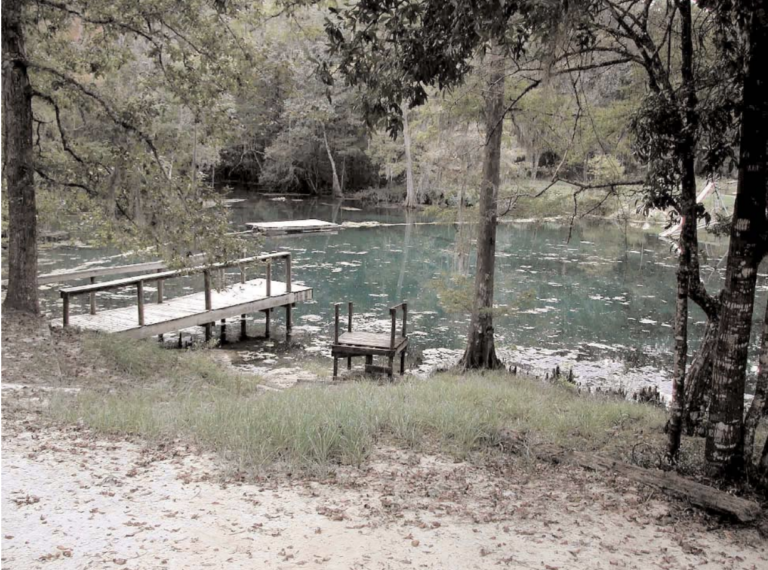
- Westside Spring — Westside Spring is located along the western edge of Wakulla Spring. The inventory notes that its water chemistry differs from Wakulla Spring, suggesting a separate groundwater discharge point. It appears to be associated with a steep-sided hole partly covered by woody debris.
- Sally Ward Spring — Sally Ward Spring is located just inside the entrance area of Wakulla Springs State Park. Its run flows toward the Wakulla River downstream of the main spring. The spring has an 18-foot-deep vent and is connected to the larger underwater cave system explored by trained research divers.
- Sweet Bay Spring — Sweet Bay Spring is named for the sweet bay trees found nearby. It lies in the northern portion of the park, east of the multi-use trail, and discharges from a small pool with a sediment- and woody-debris-laden vent. Its flow eventually joins the McBride Slough area.
- Northside Spring #1 — Northside Spring #1 is the larger of two nearby springs east-southeast of Sweet Bay Spring. The spring has a circular pool, a visible limestone crevasse, and deep blue water caused by the depth of the vent.
- Northside Spring #2 — Northside Spring #2 is located close to Northside Spring #1 but is smaller and less forceful. It still forms a clear pool and appears to discharge from beneath leafy and woody debris.
- Homestead Spring — Homestead Spring consists of several small vents and seeps at the head of a short run. The largest vent is located beneath a moss-covered fallen tree. Its name comes from a nearby former residence or farmstead area.
- Palmetto Spring — Palmetto Spring is a small, scenic spring with two discharge points near palmetto-covered flatwoods. One vent forms a small pool that spills down a slight cascade before joining another vent and continuing toward McBride Slough.
- Turn Around Spring — Turn Around Spring is named for its location near the downstream extent of the Wakulla Springs tour boat route. It lies close to the Wakulla River and discharges from several small vents into a small spring pool surrounded by floodplain.
- Wakulla No Name Spring / No Name Spring — No Name Spring is a beautiful spring near the downstream limit of Wakulla Springs State Park. It has a prominent surface boil, a pool about 20 feet across, and a long shallow run that flows to the Wakulla River.
- Chimney Spring — Chimney Spring is made up of small sand boils and seeps along a limestone bluff on the south bank of the Wakulla River. The surrounding limestone contains karst chimneys and windows, giving the spring its name.
- Rock Spring — Rock Spring is similar to Chimney Spring and forms from small sand boils and seeps along the same low limestone bluff system. It is one of the smaller groundwater discharge areas along the Wakulla River corridor.
Geology and Hydrology
Wakulla Springs sits near the western edge of the Woodville Karst Plain, one of the most important karst landscapes in North Florida. In this region, rainwater and surface water move through porous limestone, sinkholes, conduits, and underground cave systems before reemerging at springs.
The main spring is a first-magnitude spring, meaning it discharges enormous volumes of groundwater. During one NWFWMD study period, Wakulla Spring was measured as one of the two first-magnitude spring features in the St. Marks/Wakulla River basin, along with the St. Marks River Rise.
The smaller springs in the park are much lower in discharge, but together, the network of vents, seeps, pools, sloughs, and karst windows contribute to the river and surrounding wetlands.
Wildlife and the River Boat Tour
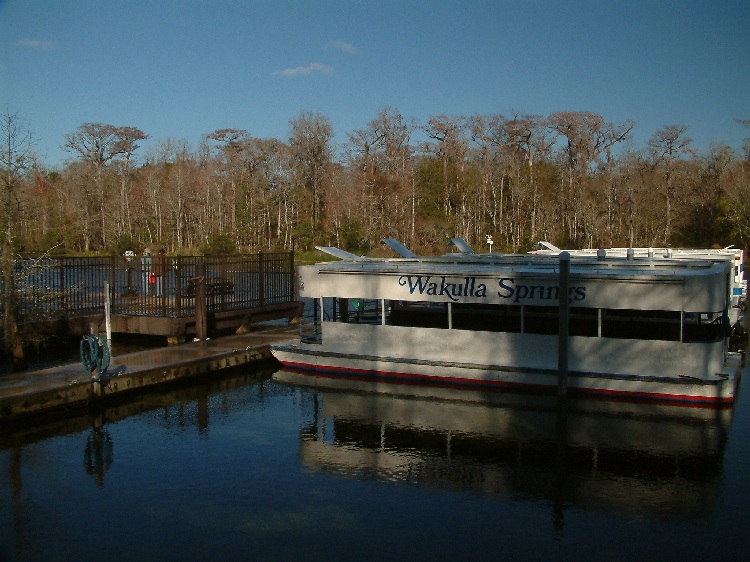
The guided boat tour is one of the signature experiences at Wakulla Springs. Visitors frequently describe it as the highlight of their trip, especially because it offers a chance to see wildlife from the water without needing a personal boat.
The tour route travels along the spring-fed Wakulla River through a protected corridor of cypress, floodplain forest, and aquatic habitat. Common wildlife sightings include alligators, turtles, fish, wading birds, anhingas, and other river species. Manatees are also possible, especially during cooler months, though sightings vary with conditions.
For many visitors, the boat tour is the best way to understand the scale of the spring and river system. The swimming area shows the head spring, but the boat tour reveals the living river that flows out of it.
Swimming and Recreation
Wakulla Springs has a designated swimming area near the main spring basin. The water is cool, clear, and refreshing, especially in warm weather. Visitor reviews often mention the swimming platform, floating docks, shallow areas, and family-friendly setup.
As with any Florida spring, conditions can vary. Water clarity, crowd levels, wildlife activity, and tour availability may change depending on weather, season, and park operations. Visitors should check current park information before making the trip, especially if the boat tour is a major reason for visiting.
The park also offers trails, picnicking, wildlife viewing, and access to the historic lodge area. For many people, Wakulla Springs works well as either a short stop from Tallahassee or a half-day visit built around swimming, lunch, and the boat tour.
The Historic Lodge
The Lodge at Wakulla Springs is one of the park’s most distinctive features. Built in the 1930s, it gives the park a historic resort atmosphere that feels different from many other Florida springs.
Visitors often mention the lodge, restaurant, cafe, ice cream shop, and gift shop as part of the experience. Even for people who come mainly for the spring or boat tour, the lodge adds a strong sense of place and history.
The park’s story is also much older than the lodge. Wakulla Springs has been associated with Paleoindian occupation, ancient animal remains, Native American history, early tourism, and archaeological research. That combination of natural history, human history, and spring ecology is part of what makes the park unusually rich.
Visitor Experience
Wakulla Springs is popular for good reason. Recent visitor reviews consistently highlight the wildlife, boat tour, cold spring water, historic lodge, and peaceful Old Florida scenery.
The main positives visitors mention include:
- excellent wildlife viewing
- frequent alligator, bird, turtle, and occasional manatee sightings
- a memorable guided boat tour
- a beautiful and historic lodge
- swimming in cold spring water
- a family-friendly atmosphere
- easy access from the Tallahassee area
The main cautions are also worth knowing. Boat tours can sell out, weather can affect operations, and the park can become crowded during popular times. Some visitors also note that the spring bottom can be uneven in the swimming area, so water shoes may be helpful.
Final Thoughts
Edward Ball Wakulla Springs State Park combines a massive first-magnitude spring, a historic lodge, a scenic swimming area, a wildlife-rich river tour, and a much larger network of smaller springs hidden throughout the park landscape. It’s a great place to enjoy the day (or longer) with family or friends.
More Resources
- Florida State Parks — Edward Ball Wakulla Springs State Park
- Florida State Parks — Historic Boat Tours at Wakulla Springs
- Wikipedia
- USGS Monitoring Location
- Northwest Florida Water Management District — St. Marks River and Wakulla River Springs Inventory
- The Lodge at Wakulla Springs
WV-Mike www.EpicRoadTrips.us, CC BY 3.0 <https://creativecommons.org/licenses/by/3.0>, via Wikimedia Commons
Sorry, no records were found. Please adjust your search criteria and try again.
Sorry, unable to load the Maps API.
Nearby Springs