Falmouth Spring
Falmouth Spring
Summary
Falmouth Spring is one of the most significant springs in the Suwannee River region and is designated as an Outstanding Florida Spring. Located near the small community of Falmouth in Suwannee County, the spring is managed by the Suwannee River Water Management District within a protected 276-acre property of hardwood forest, pine uplands, and karst terrain.
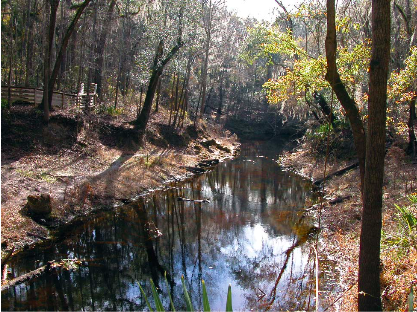
Often called the “Shortest River in the World,” Falmouth Spring is unusual because the spring run flows only about 450 feet before disappearing underground again through a swallet and eventually reemerging at the Suwannee River. The spring is not just a surface feature — it is a visible opening into one of the most extensive underwater cave systems in North Florida.
Karst Window and Cave System
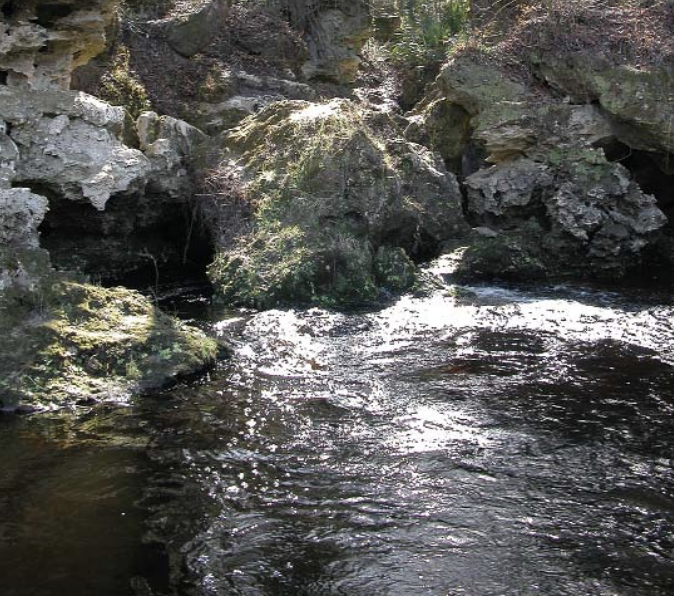
Falmouth Spring is classified as a karst window, meaning it is an exposed section of an underground river system formed by collapse of the limestone above the cave. Water emerges from a deep conical depression before flowing through a narrow spring run.
The spring is associated with the Falmouth Cathedral Cave System, one of the longest mapped underwater cave systems in the world. Dye-trace studies later demonstrated hydrologic connections between Falmouth Spring, Ellaville Spring, and Suwanacoochee Spring beneath the Suwannee River corridor.
The underground system is part of the Floridan Aquifer and illustrates the remarkable connectivity of North Florida’s karst landscape. Limestone, dolomite, gypsum, caves, sinks, swallets, and underground conduits dominate the geology of the area.
Swimming and Recreation
Falmouth Spring is one of the more accessible springs in the region and is open to the public for recreation. Visitors come to:
- swim,
- hike,
- picnic,
- explore the boardwalks,
- and enjoy the quiet forest setting.
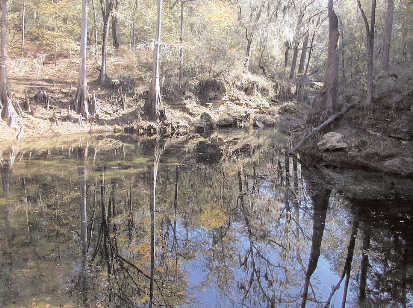
Unlike many heavily developed Florida springs, Falmouth retains a relatively secluded atmosphere. The spring pool is surrounded by steep wooded limestone banks, and the short spring run winds through dense forest before disappearing underground again.
A boardwalk and trail system allow visitors to explore the area without heavily impacting the fragile karst environment.
Scenic Character
The spring is especially known for its peaceful atmosphere and reflective dark-blue water beneath a hardwood canopy. During lower water conditions, the spring basin and limestone walls become more visible, creating one of the most photogenic spring settings in North Florida.
The contrast between the quiet forest, steep karst walls, and disappearing spring run gives Falmouth a very different feel from Florida’s larger open swimming springs.
The nearby Suwannee River valley adds even more scenic value, with limestone bluffs, floodplain forest, sinkholes, and historic river crossings throughout the surrounding area.
Hydrology and Water Quality
Falmouth Spring has experienced flow reversals during high Suwannee River stages, when river water can push back into the spring system. Scientists and conservation groups have also raised concerns about nitrate pollution and groundwater vulnerability within the springshed.
Because the cave system is directly connected to the Floridan Aquifer, the spring is especially sensitive to:
- groundwater withdrawals,
- contamination,
- sinkhole activity,
- and large-scale development projects.
The proposed Sabal Trail pipeline route generated significant environmental concern because of its proximity to the Falmouth Cathedral Cave System and surrounding karst terrain.
History
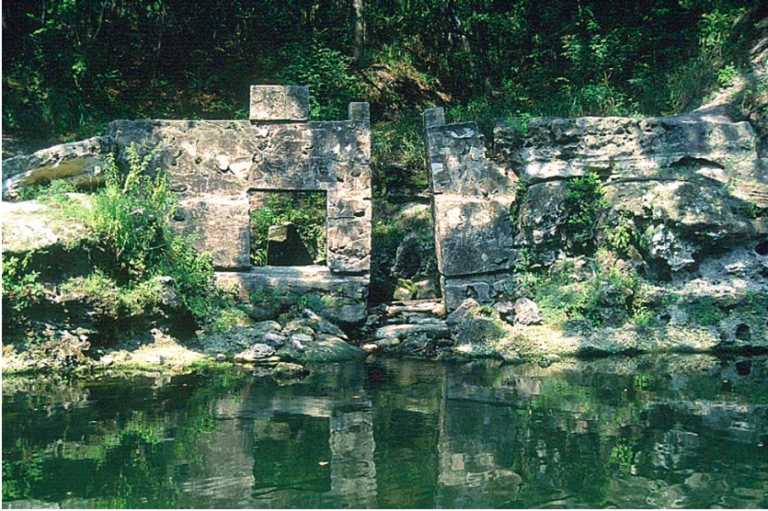
Historic photographs show that Falmouth Spring has long been a destination for recreation and exploration. The area has changed considerably over the last century, but the spring remains one of the defining natural landmarks of the Suwannee River corridor.
Older geological surveys described the spring as having steep limestone walls and a visible underground opening beneath the water surface. Explorers and cave divers have studied the system for decades because of its unusual hydrology and extensive cave passages.
Hiking and Nearby Features
Falmouth Spring is closely connected to several other important springs and karst features nearby, including:
- Lime Run Spring,
- Ellaville Spring,
- Suwanacoochee Spring,
- Little Gem Spring,
- Five Holes,
- and the broader Suwannee River State Park region.
The surrounding area is excellent for:
- hiking,
- paddling,
- wildlife viewing,
- photography,
- and exploring North Florida karst landscapes.
More Resources
Photo: Florida Geological Survey, Bulletin No. 66
Sorry, no records were found. Please adjust your search criteria and try again.
Sorry, unable to load the Maps API.
Nearby Springs