Suwanacoochee Spring
Suwanacoochee Spring
Summary
Suwanacoochee Spring is a second-magnitude spring located near the confluence of the Withlacoochee and Suwannee rivers in the historic Ellaville area of North Florida. The spring sits within or adjacent to Suwannee River State Park and the Ellaville tract managed by the Suwannee River Water Management District.
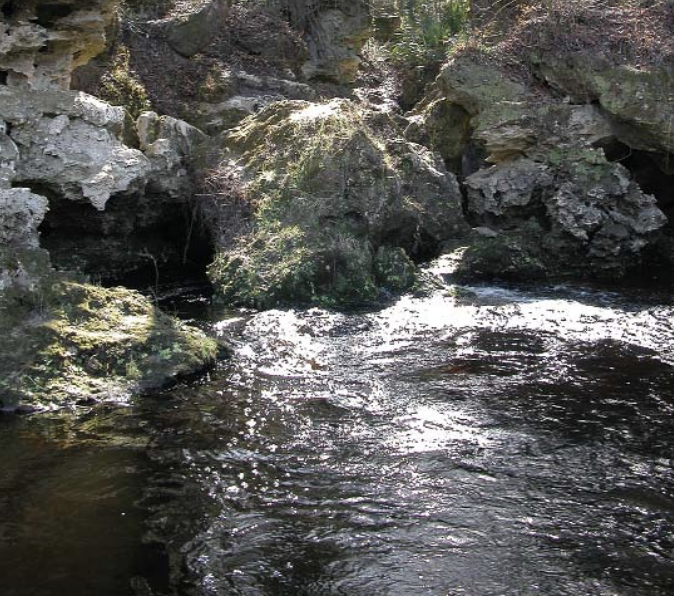
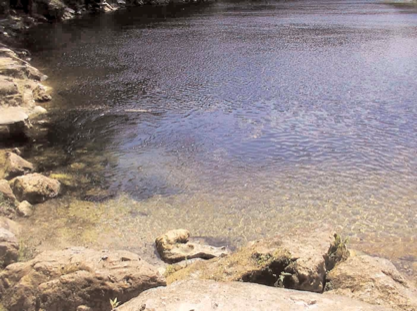
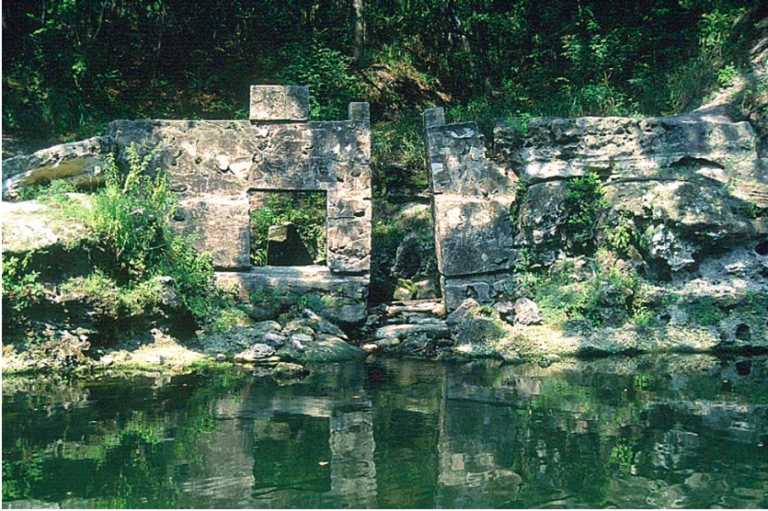
Although relatively small compared to Florida’s famous first-magnitude springs, Suwanacoochee is one of the region’s most geologically and historically fascinating springs. Clear groundwater emerges from limestone near the riverbank before flowing directly into the Withlacoochee River just upstream from its meeting with the Suwannee River. The spring is surrounded by old limestone and concrete ruins believed to be connected to late-1800s development associated with the former logging town of Ellaville.
The spring is also notable for its underwater cave connections. Dye-trace studies and cave-diving surveys have demonstrated that Suwanacoochee Spring is hydrologically connected to Ellaville (Edwards) Spring and the broader Falmouth Cathedral Cave System beneath the Suwannee River.
Cave Diving and Karst Geology
Suwanacoochee Spring is best known among cave divers and karst researchers. Cave-diving sources describe the spring as part of an extensive underwater cave system that extends beneath both the Withlacoochee and Suwannee rivers. The connected Edwards–Suwanacoochee traverse reportedly passes beneath two rivers and through three counties.
The spring pool itself is relatively small, but beneath the surface the system expands into submerged limestone conduits associated with the Floridan Aquifer. Dye-trace work conducted by the Suwannee River Water Management District and the Florida Geological Survey confirmed groundwater connections between Falmouth Spring, Ellaville Spring, and Suwanacoochee Spring. These studies highlighted the extreme hydrologic interconnectedness of the karst terrain in this portion of North Florida.
The cave system should only be explored by properly trained cave divers. Visibility conditions can vary significantly depending on river stage and tannic water levels.
Recreation and Access
Unlike many Florida springs, Suwanacoochee Spring is not a major swimming destination. The spring is small, rocky, and closely tied to river flow conditions. However, it is an outstanding destination for hikers, paddlers, photographers, history enthusiasts, and adventurous spring hunters.
Visitors can access the area from the historic Ellaville site near the old Hillman Bridge and railroad trestle. Trails lead through hardwood forest toward the river confluence and spring area.
The area is especially scenic during lower river conditions, when exposed limestone, shoals, sandbars, and spring flow become more visible. WWALS paddling trips and local hiking groups frequently visit the area because of its combination of:
- springs,
- shoals,
- river confluences,
- historic ruins,
- and old-growth river scenery.
Historic Ellaville
Suwanacoochee Spring is deeply tied to the history of Ellaville, a once-thriving 19th-century timber town founded by Florida governor George Franklin Drew. The town grew around sawmills, river crossings, rail transport, and logging operations near the confluence of the Suwannee and Withlacoochee rivers.
Today, little remains of Ellaville itself, but traces of the old settlement survive in:
- the Hillman Bridge,
- old railroad infrastructure,
- earthworks,
- and the stone/concrete structures surrounding Suwanacoochee Spring.
Some local accounts suggest the spring ruins may have once been associated with bathing structures or water-control features connected to the former town and industrial operations.
Paddling and Nearby Features
The spring lies along one of the most scenic river corridors in North Florida. Paddlers traveling the Withlacoochee and Suwannee rivers often pass near:
- Suwanacoochee Spring,
- Ellaville Spring,
- Five Holes,
- Lime Run,
- Falmouth Spring,
- and numerous shoals and limestone outcrops.
The nearby confluence of the Withlacoochee and Suwannee rivers creates a particularly dramatic landscape with changing water colors, strong currents, exposed limestone, and rich wildlife habitat.
The surrounding area is also popular for:
- kayaking,
- canoeing,
- hiking,
- photography,
- birdwatching,
- and historical exploration.
Natural Setting
Suwanacoochee Spring sits within a heavily karstified limestone landscape shaped by groundwater dissolution over thousands of years. Sinkholes, caves, springs, swallets, and underground conduits are common throughout the region.
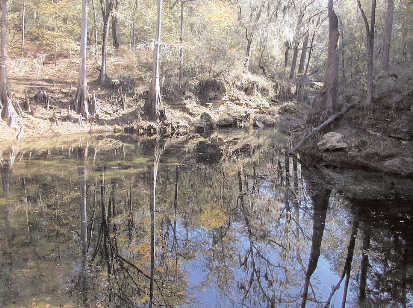
River water levels strongly influence the appearance of the spring. During high-water periods, parts of the spring may become partially submerged or difficult to distinguish from surrounding river flow. During lower water levels, the spring vent, limestone shelves, and historic ruins become much more visible.
The area’s dense canopy, limestone banks, tannic river water, and exposed rock formations create one of the more atmospheric and visually distinctive spring settings in Florida.
More Resources
- Florida Caves
- Cave Atlas
- WWALS
- Lands of North Florida Realty
- USGS Monitoring Location
- Suwannee River Water Management District
Photo: Florida Geologic Survey, Bulletin No. 66
Sorry, no records were found. Please adjust your search criteria and try again.
Sorry, unable to load the Maps API.
Nearby Springs