Lime Run Spring
Lime Run Spring
Summary
Lime Run Spring, also known as Lime Spring, Lime Sink Run, Dry Run, or Dry Run Spring, is an intermittent spring and spring-run system in Suwannee River State Park. It is one of the most interesting springs in the park because it does not always behave like a typical flowing spring. Depending on river stage and groundwater conditions, the system may flow strongly, appear still, or even function more like a sink.
The spring is associated with the Falmouth Cathedral Cave System, one of the longest known underwater cave systems in the world. WWALS describes Lime Run Spring as the endpoint of that cave system and identifies it as a first-magnitude spring.
Natural Setting
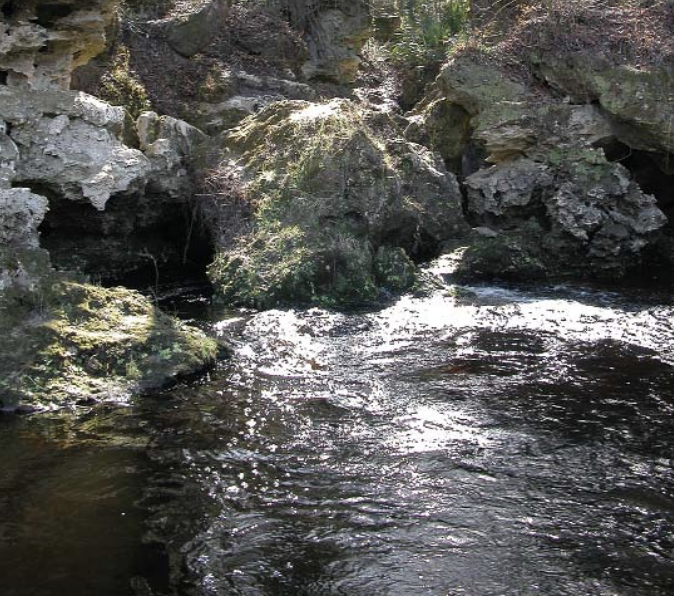
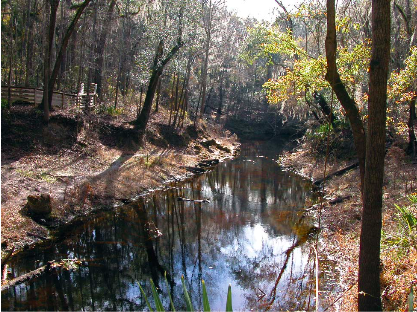
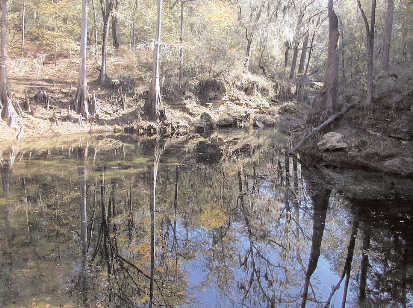
Lime Run Spring forms a shaded, forested spring-run corridor within Suwannee River State Park. The run passes through a deep limestone ravine before reaching the Suwannee River near the park’s boat ramp. The area is known for hardwood forest, cypress, limestone banks, and quiet reflective water when the run is not flowing strongly.
Older spring descriptions note that the spring pool is circular to oval and surrounded by limestone bluffs, trees, and dense vegetation. The run is roughly two-thirds of a mile long and has historically been called Dry Run because it can stop flowing during certain conditions.
Hydrology and Cave System
Lime Run Spring is hydrologically complex. It has been described as intermittent, and older observations noted periods when the spring was not flowing. In some conditions, the spring/run system may act more like a sink, with water movement influenced by Suwannee River levels and groundwater pressure.
The spring is especially important because of its connection to the Falmouth Cathedral Cave System. This makes the area significant not just as a scenic spring run, but as part of a much larger underground karst network connected to the Floridan Aquifer.
Hiking and Recreation
For most visitors, Lime Run Spring is best experienced as part of a hike in Suwannee River State Park. The Suwannee River and Lime Sink Run Trail is a short, shaded route that follows the spring-run corridor and offers views of the ravine, forest, and water.
This is not really a swimming spring. The appeal is more about scenery, geology, photography, and quiet exploration. When water levels are right, the reflections in the run and the surrounding forest can make this one of the most atmospheric spots in the park.
History
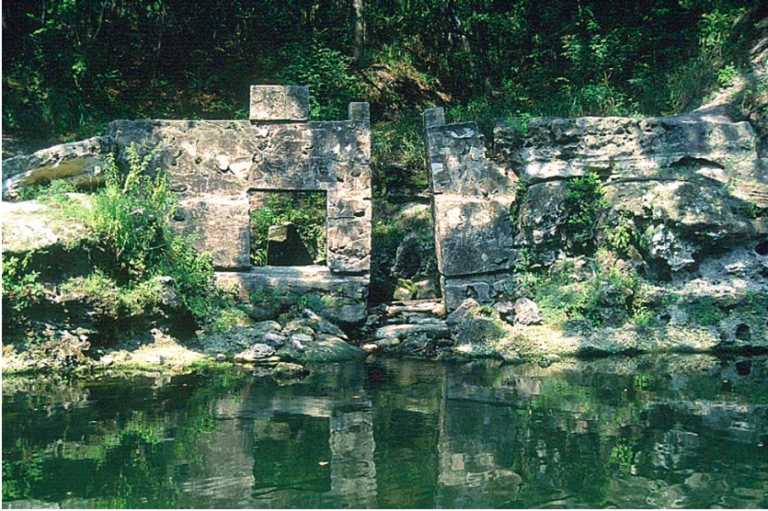
In the 1960s and 1970s, part of Lime Run was reportedly modified into a swimming area with facilities such as restrooms and changing structures. Those facilities are gone today, and the area has returned to a much more natural appearance.
The modern site feels wild and quiet, but its history as a former recreation area adds another layer to the spring’s story.
Conservation
Lime Run Spring has drawn attention from conservation groups because of its connection to the Falmouth Cathedral Cave System and the vulnerability of the surrounding karst terrain. WWALS raised concerns about the Sabal Trail pipeline route in relation to the cave system and nearby infrastructure.
Because karst landscapes can transmit water rapidly through underground conduits, springs like Lime Run are sensitive to changes in land use, groundwater levels, and contamination risks.
More Resources
Photo: Florida Geological Survey, Bulletin No. 66
Sorry, no records were found. Please adjust your search criteria and try again.
Sorry, unable to load the Maps API.
Nearby Springs